
Experience the Healing Power of Cross Fibre Release
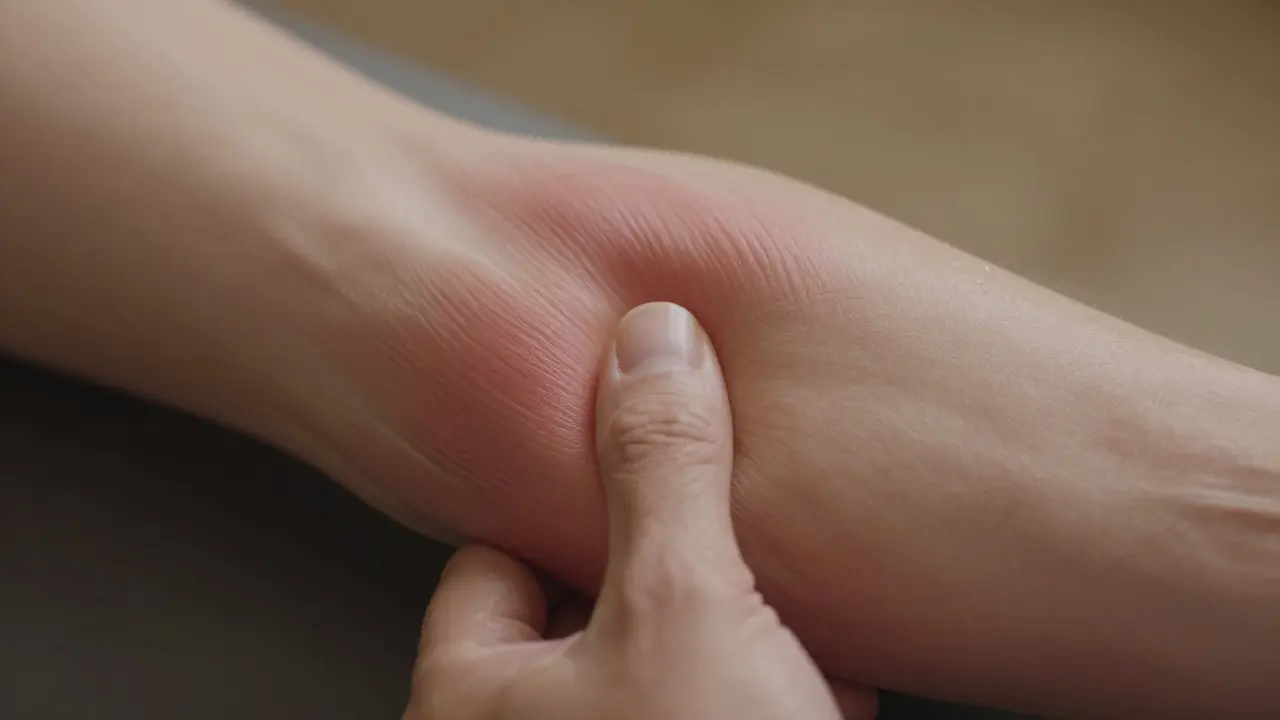
Ever felt a knot in your shoulder that no amount of stretching or foam rolling could touch? You massage it, you ice it, you even try heat - but it just won’t let go. That’s not just a tight muscle. That’s scar tissue, adhesions, or thickened fascia locking your movement in place. And that’s where cross fibre release comes in.
What Cross Fibre Release Actually Does
Cross fibre release isn’t just another massage technique. It’s a targeted manual therapy that applies pressure perpendicular to the direction of muscle or tendon fibres. Unlike deep tissue massage, which follows the length of the muscle, cross fibre release breaks up disorganized collagen deposits that form after injury, overuse, or chronic tension.
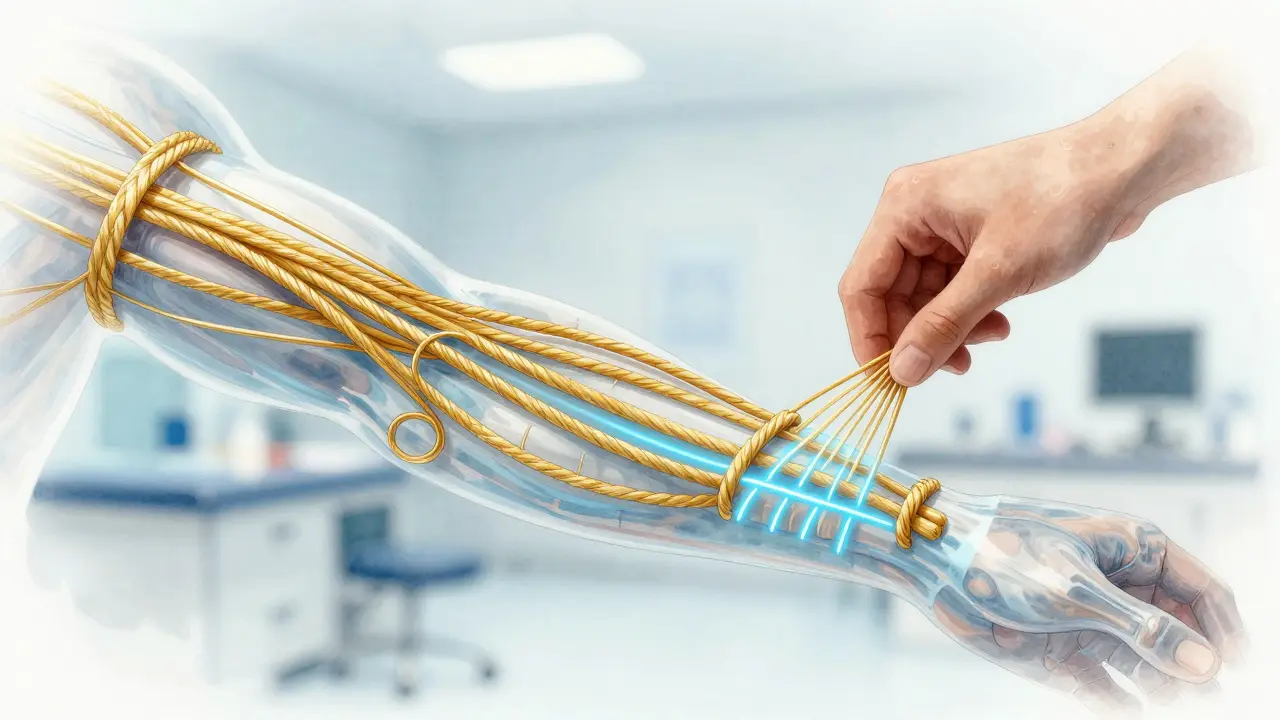
When you sprain your ankle or strain your rotator cuff, your body rushes in with collagen to patch things up. But that repair isn’t always neat. The fibres get tangled like old rope. Over time, that tangled tissue becomes stiff, painful, and restricts motion. Cross fibre release doesn’t just push on the pain - it realigns the structure beneath it.
Think of it like brushing tangled hair. You don’t pull straight down - you work across the knots. Same principle. The pressure is firm, but not crushing. It’s focused. And it’s slow. Each stroke lasts 5 to 10 seconds, repeated 3 to 5 times per area. Done right, you’ll feel a deep ache, then a release - like a door unlocking.
Why It Works When Other Methods Don’t
Stretching alone won’t fix adhesions. Foam rolling is great for general tension, but it’s too broad. Heat relaxes muscles, but doesn’t break structural bonds. Cross fibre release targets the root cause: disorganized collagen.
A 2023 study in the Journal of Manual and Manipulative Therapy tracked 72 patients with chronic tennis elbow. Half received standard stretching and ultrasound. The other half got cross fibre release three times a week for four weeks. The cross fibre group saw a 68% greater reduction in pain and a 52% improvement in grip strength compared to the control group. The difference? They weren’t just relaxing tissue - they were rebuilding it.
That’s why athletes, physical therapists, and even office workers with repetitive strain injuries swear by it. It’s not magic. It’s biomechanics.
Where It’s Most Effective
Cross fibre release works best on areas with dense, linear tissue:
- Tennis elbow (lateral epicondyle)
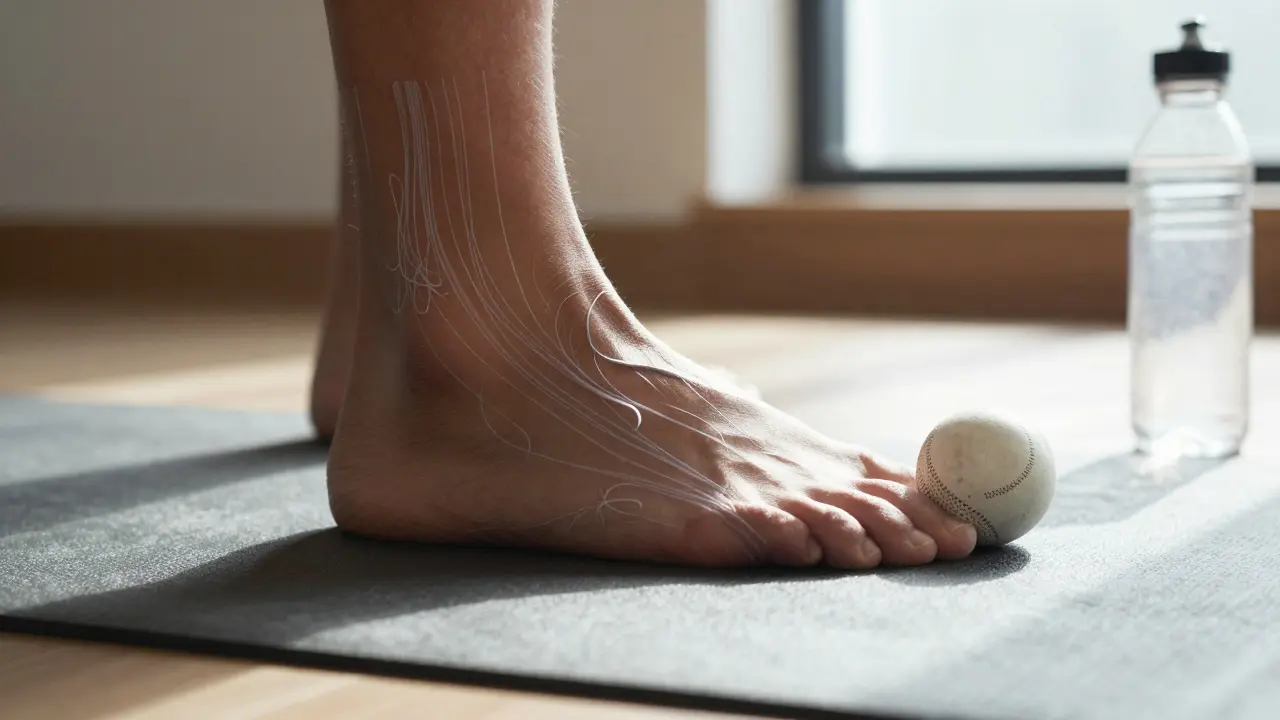
- Plantar fasciitis (along the arch of the foot)
- Rotator cuff tendons (back of the shoulder)
- IT band syndrome (outer thigh)
- Chronic hamstring strains
- Scar tissue from surgery or old injuries
It’s less effective on large, flat muscles like the quadriceps or glutes, where fibres run in multiple directions. You need a clear, dominant fibre orientation to work across it.
One common mistake? People try it on the neck or spine. That’s risky without training. Stick to limbs and extremities unless you’re working with a professional.
How to Do It Yourself (Safely)
You don’t need a therapist for every session. Once you learn the basics, you can manage minor issues at home.
- Find the tender spot. Press around until you locate the tightest, most painful point - that’s where the adhesion is.
- Use your thumb, knuckle, or a tool like a lacrosse ball or massage stick. Don’t use your fingers alone - they’ll tire and lose pressure.
- Position yourself so you can apply pressure perpendicular to the fibre direction. For example, on the forearm for tennis elbow, the fibres run from elbow to wrist. So your pressure should go side to side, not up and down.
- Apply steady pressure for 5-10 seconds. Breathe. Don’t hold your breath.
- Move 1-2 cm along the tissue and repeat. Work the entire length of the tight area.
- Do this 2-3 times a day for 3-5 days. Stop if you bruise or feel sharp pain.
Pro tip: Warm the area first. A warm shower or heating pad for 5 minutes makes the tissue more pliable. You’ll get better results with less discomfort.
What to Expect After
Right after a session, your muscle might feel sore - like you did a tough workout. That’s normal. It’s your body responding to the breakdown of scar tissue.
Within 24-48 hours, you should notice:
- Less stiffness when moving
- Improved range of motion
- Reduced aching during daily tasks
It’s not instant. This isn’t a quick fix. It’s tissue remodeling. Most people need 3-6 sessions over 2-3 weeks to see lasting change. If you stop too soon, the tissue reverts.
Hydration helps. Drink water after - it supports the body’s natural cleanup process. And gentle movement after the session (like walking or slow stretching) encourages the new collagen to lay down in the right direction.
When to Skip It - and When to See a Pro
Cross fibre release is safe for most people. But avoid it if you have:
- Blood clots or deep vein thrombosis
- Open wounds or recent surgery in the area
- Severe osteoporosis
- Active inflammation (red, hot, swollen tissue)
If you’re unsure, start slow. Try it on a small area like your forearm first. If it feels good and helps, great. If you feel numbness, tingling, or shooting pain - stop. That’s a nerve warning.
For chronic issues - like recurring plantar fasciitis or shoulder pain that’s lasted over 6 months - see a physiotherapist or massage therapist trained in cross fibre techniques. They’ll know exactly where to apply pressure, how deep to go, and when to combine it with mobility drills.
How It Fits Into a Bigger Healing Plan
Cross fibre release isn’t a standalone cure. It’s one piece of a puzzle. Pair it with:
- Gradual strengthening exercises
- Proper posture and movement patterns
- Hydration and anti-inflammatory nutrition
- Rest and recovery
Someone with tennis elbow who only does cross fibre release but keeps typing 8 hours a day won’t get better. The tissue reforms under stress. You have to change the cause, not just treat the symptom.
Think of it like fixing a cracked sidewalk. You can patch the crack, but if the ground keeps shifting, it’ll crack again. Cross fibre release fixes the patch. You need to fix the ground too.
The Real Secret: Consistency Over Intensity
The biggest mistake people make? Going too hard too fast. They think more pressure = better results. It doesn’t. In fact, too much force causes micro-tears that lead to more scar tissue.
Effective cross fibre release is slow, steady, and repeated. Two minutes of focused work, done daily, beats 20 minutes of painful grinding once a week. It’s the difference between a gentle tide and a crashing wave. The tide reshapes the shore. The wave just leaves debris.
And that’s the power of this technique. It doesn’t force change. It guides it. It lets your body heal the way it was meant to - by rebuilding, not breaking.