Unlocking the Secrets of Acupressure: How Pressure Points Ease Pain and Stress
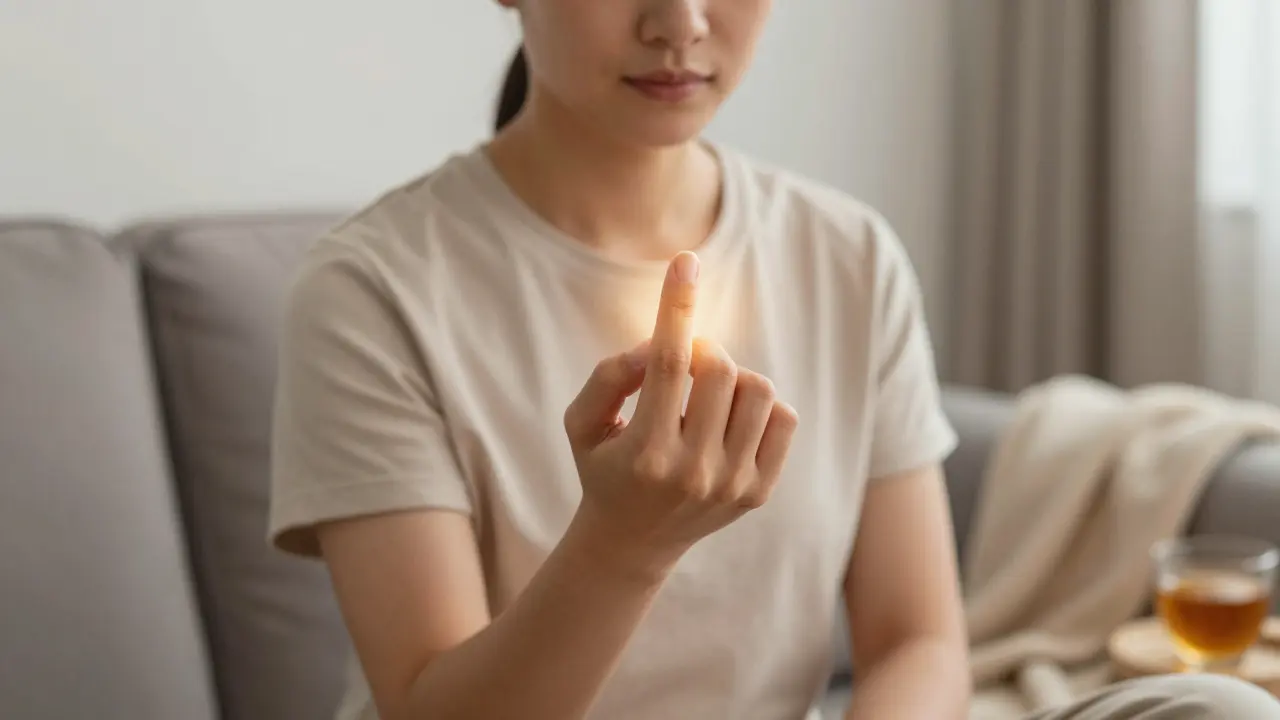
Most people think of acupuncture when they hear about traditional Chinese medicine - needles, clinics, and a bit of mystery. But there’s a simpler, safer, and just as powerful version that you can do yourself right on your couch: acupressure. It’s been used for over 5,000 years, and today, millions rely on it to ease headaches, calm anxiety, and even improve sleep - no needles required.
What Exactly Is Acupressure?
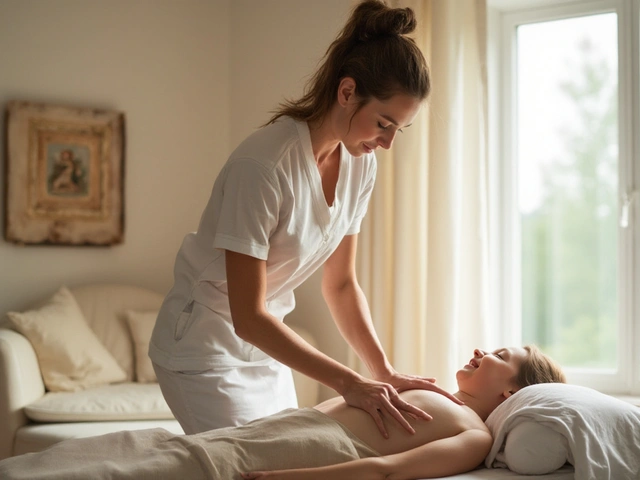
Acupressure is based on the same system as acupuncture: the idea that your body has energy pathways, called meridians, running through it. Along these pathways are hundreds of tiny points where energy can get stuck or blocked. When that happens, you feel pain, tension, or illness. Acupressure uses firm, steady pressure with fingers, thumbs, or even a small tool to stimulate those points and release the blockage.
Unlike acupuncture, there are no needles. Just your hands. You can do it on yourself. That’s why it’s so popular among people who want natural relief without drugs or appointments. It’s been studied in hospitals from Tokyo to Toronto. A 2023 meta-analysis in the Journal of Clinical Medicine found that acupressure significantly reduced chronic lower back pain in 78% of participants after just four weeks of daily use.
How It Works: Science Meets Tradition
Modern science doesn’t talk about "energy flow," but it does understand what happens when you press on these points. Applying pressure triggers nerves that send signals to your brain, which then releases endorphins - your body’s natural painkillers. It also lowers cortisol, the stress hormone, and improves blood flow to tight muscles.
Think of it like resetting a circuit breaker. When you’re stressed, your nervous system stays stuck in "fight or flight." Acupressure flips it back to "rest and digest." That’s why people who use it regularly report not just less pain, but better sleep, fewer migraines, and even improved digestion.
The Five Most Powerful Points for Everyday Use
You don’t need to memorize all 361 points. Just learning five can change how you feel day to day. Here’s where to find them and what they do:
- LI4 (Hegu) - Between thumb and index finger: This is the go-to point for headaches, sinus pressure, and even toothaches. Press firmly for 30 seconds on each hand. Avoid this point if you’re pregnant.
- PC6 (Neiguan) - Inner wrist, three finger-widths below the crease: Known for nausea, motion sickness, and anxiety. Press with your thumb while taking slow breaths. Works in under a minute on planes or in cars.
- GV20 (Baihui) - Top of the head: Found by drawing a line from ear to ear and meeting it with a line from forehead to back of head. Helps with dizziness, fatigue, and mental fog. Use your fingertips in a gentle circular motion for one minute.
- SP6 (Sanyinjiao) - Inner leg, four finger-widths above the ankle: A powerful point for menstrual cramps, insomnia, and digestive issues. Many women use this daily during their cycle. Press with firm, steady pressure for 45 seconds on each leg.
- BL23 (Shenshu) - Lower back, two finger-widths from spine: Relieves lower back pain and kidney fatigue. Use your knuckles or a tennis ball against a wall. Roll gently for two minutes.
When to Use Acupressure - And When to Avoid It
Acupressure is safe for most people. You can use it daily. But there are exceptions:
- Don’t press on open wounds, burns, or swollen areas.
- Avoid during pregnancy unless guided by a professional. Some points, like LI4 and SP6, can stimulate contractions.
- Don’t use if you have a bleeding disorder or are on blood thinners. Pressure could cause bruising or internal bleeding.
- Wait 30 minutes after eating. Your body needs to digest - don’t interfere.
And here’s the truth: it doesn’t work instantly for everyone. Some people feel relief in seconds. Others need consistent use for a week or more. Think of it like stretching - the benefits build over time.
How to Do It Right: A Simple Routine
You don’t need a massage table. Just sit or lie down comfortably. Use your thumb, index, or middle finger. Press straight into the point - not rubbing, not tapping. Hold until you feel a mild ache (not pain). Breathe deeply. Hold for 30 to 60 seconds per point.
Try this quick routine before bed:
- Press PC6 (inner wrist) for 45 seconds on each arm.
- Use your knuckle to roll over BL23 (lower back) for 90 seconds.
- Press GV20 (top of head) in circles for one minute.
- Finish with slow, deep breaths for 30 seconds.
Do this for seven days. Most people notice better sleep by day three. Some report fewer headaches by day five.
Tools and Tips to Make It Easier
You can use your fingers - that’s all you need. But if you want more precision or relief for hard-to-reach spots, here are a few simple tools:
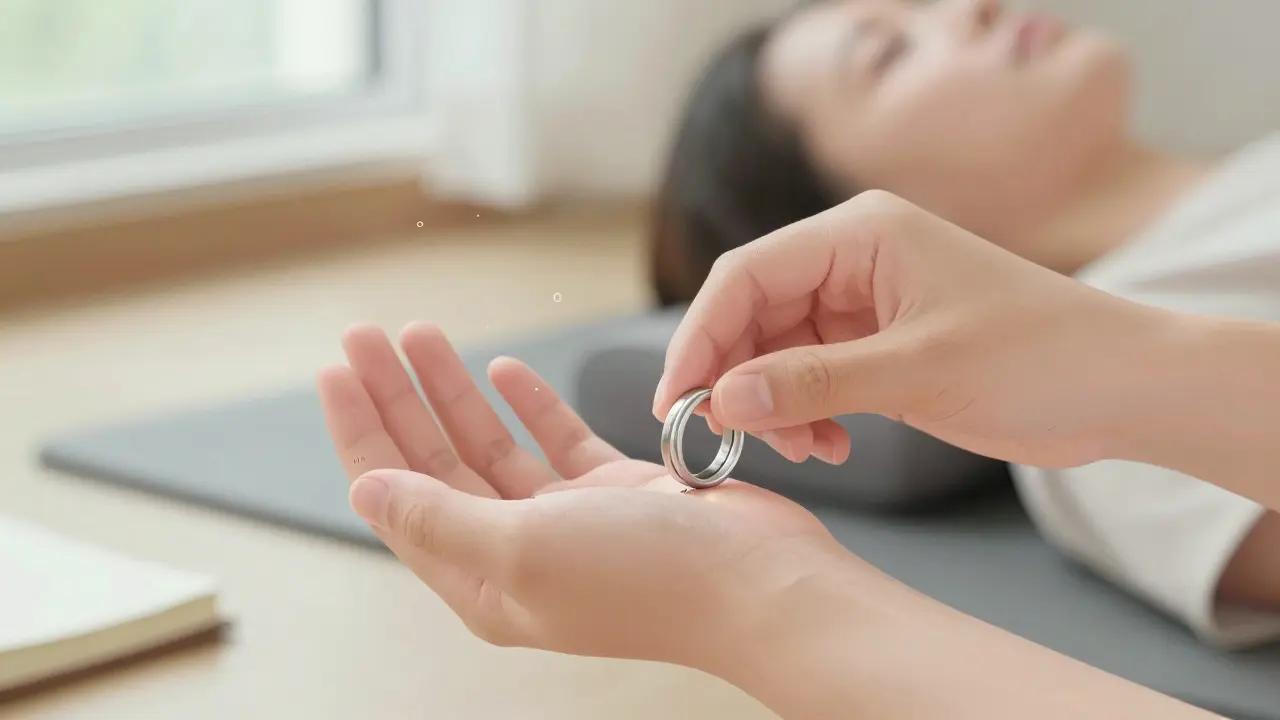
- Acupressure rings: Wear them on your fingers to apply pressure while typing or driving.
- Acupressure mats: Lie on them for 10-20 minutes. The tiny spikes stimulate dozens of points at once. Great for back tension.
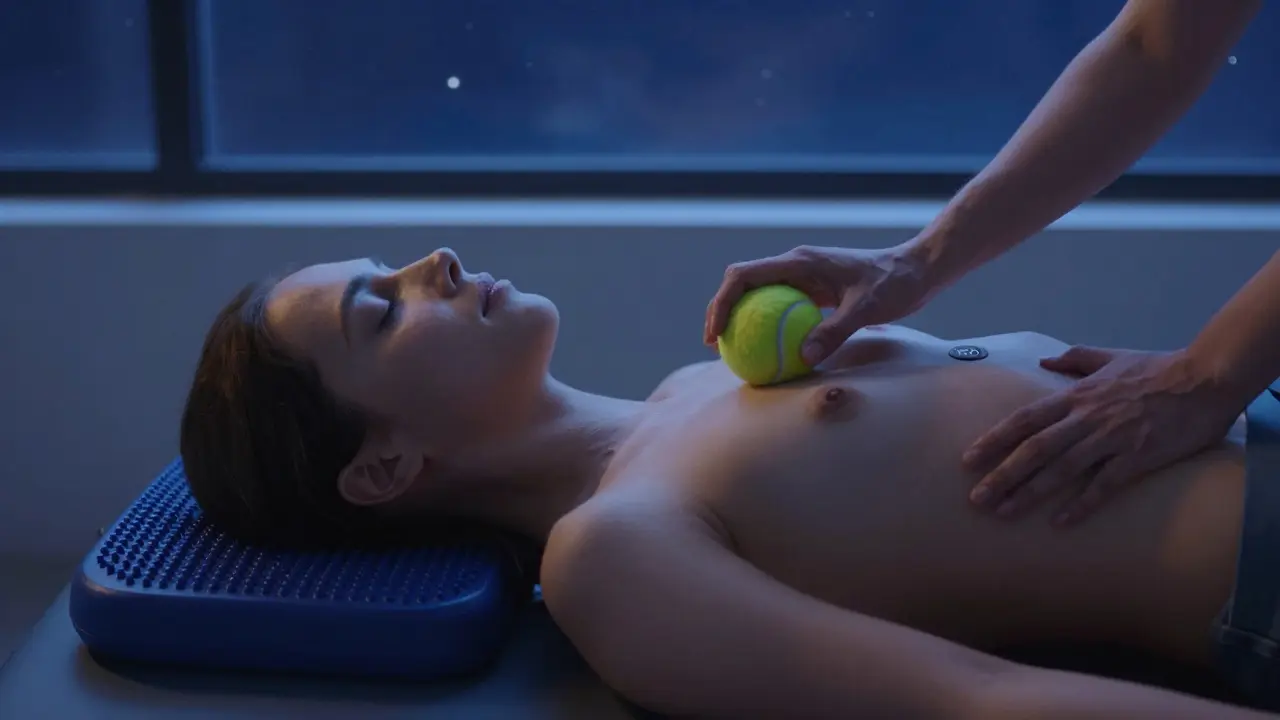
- Small massage balls: Roll one under your foot or against your shoulder blade. Works wonders for plantar fasciitis and neck pain.
Don’t spend $100 on gadgets. A tennis ball and your own hands are enough to start.
How Acupressure Compares to Other Therapies
| Method | Cost | Time to Relief | Side Effects | Can You Do It Yourself? |
|---|---|---|---|---|
| Acupressure | $0-$20 | Seconds to days | None (when done correctly) | Yes |
| Acupuncture | $50-$120 per session | 1-3 sessions | Mild bruising | No |
| Massage Therapy | $60-$150 per session | 1-2 sessions | Soreness | Partially |
| Over-the-counter painkillers | $5-$20 per month | 15-30 minutes | Stomach upset, liver strain | Yes |
| Physical Therapy | $100-$300 per session | Weeks | None | No |
Acupressure wins on accessibility and safety. It’s not a replacement for medical care - but it’s an excellent daily tool to reduce reliance on pills and appointments.
Real-Life Stories: What People Are Saying
A 52-year-old teacher in Sydney used acupressure daily after her chronic migraines didn’t respond to medication. Within three weeks, her headaches dropped from five times a week to once a month. "I stopped carrying painkillers in my purse," she said. "Now I carry my thumb." A college student in Melbourne struggled with anxiety and insomnia. She started pressing PC6 before bed and LI4 when she felt panic rising. "I didn’t believe it at first," she told a friend. "But now I don’t sleep without it." These aren’t rare cases. They’re common. And they don’t require special training.
Why This Isn’t Just "Alternative" - It’s Practical
Acupressure isn’t magic. It’s biology. It’s science that’s been refined over millennia. You don’t need to believe in energy channels to benefit. Just press the right spot, breathe, and let your body respond.
It’s free. It’s safe. It’s always with you. And unlike pills, it doesn’t wear off or build tolerance. The more you use it, the more sensitive your body becomes to its own healing signals.
Start today. Pick one point. Press it for one minute. Breathe. See what happens. You might be surprised how much relief you’ve been carrying around - and never knew how to release.
Can acupressure really help with anxiety?
Yes. Studies show that pressing the PC6 point on the inner wrist reduces cortisol levels and activates the vagus nerve, which calms the nervous system. A 2024 clinical trial found that participants with moderate anxiety who used acupressure twice daily for four weeks reported a 41% drop in symptoms - comparable to mild anti-anxiety medication, but without side effects.
How long does it take to see results from acupressure?
Some people feel immediate relief - especially for nausea or tension headaches. For chronic issues like back pain or insomnia, most see noticeable improvement within 3 to 7 days of daily use. Consistency matters more than intensity. Ten minutes a day, every day, works better than an hour once a week.
Is acupressure the same as reflexology?
No. Reflexology focuses only on the feet and hands, assuming they mirror the whole body. Acupressure targets specific points along energy meridians anywhere on the body - including the head, back, and legs. While both use pressure, acupressure is based on traditional Chinese medicine, and reflexology is a modern adaptation.
Can I use acupressure with other treatments?
Absolutely. Many people combine it with yoga, meditation, or physical therapy. It’s safe to use alongside prescribed medications. Just avoid pressing on areas with open wounds, infections, or recent injuries. Always check with your doctor if you’re pregnant or have a serious medical condition.
Do I need special training to do acupressure?
No. You don’t need certification or a license. The five key points covered here are safe for beginners. Apps and charts can help, but your fingers are the best tool. Start slow, listen to your body, and don’t push into sharp pain. If it hurts too much, ease off. The goal is pressure, not punishment.