Lomi Lomi Massage: A Hawaiian Secret to Relaxation
Have you ever felt like your body is holding onto stress you didn’t even know you had? Not the kind you can shake off after a long nap or a walk outside, but the deep, heavy kind that settles in your shoulders, your jaw, your hips? That’s where lomi lomi massage comes in-not just as a treatment, but as a release.
What Exactly Is Lomi Lomi Massage?
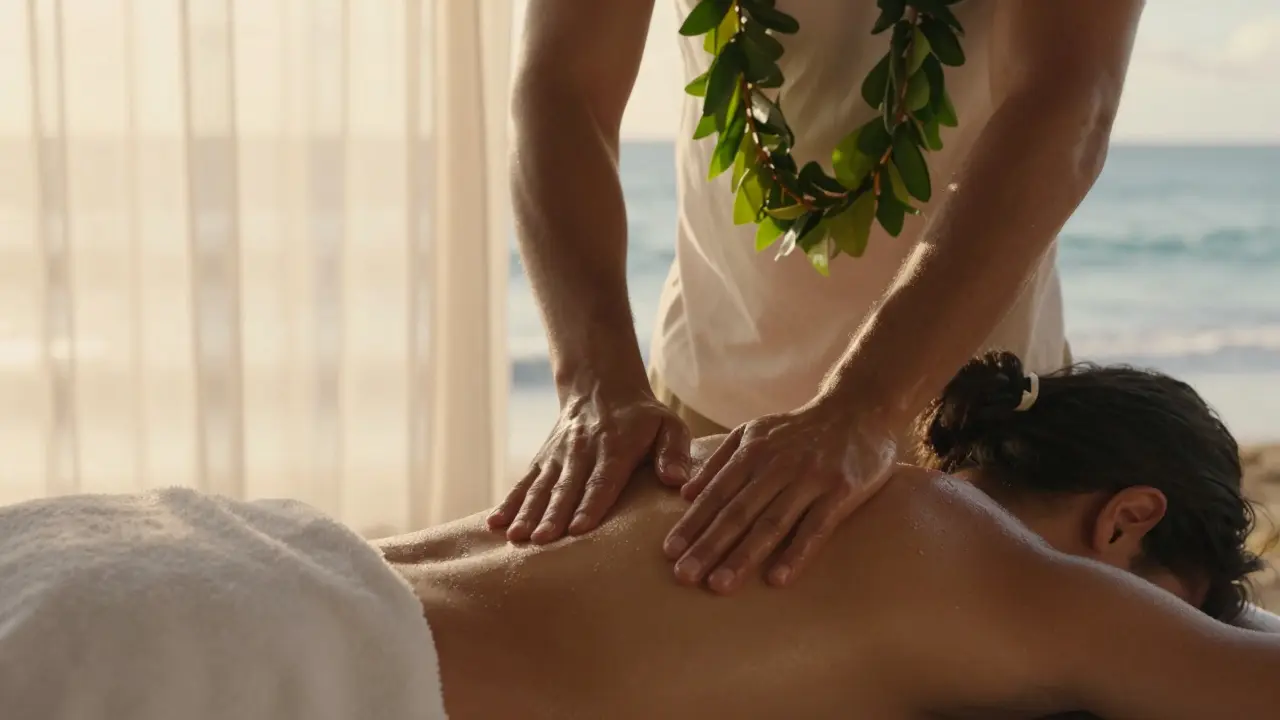
Lomi lomi massage isn’t just another type of bodywork. It’s a sacred Hawaiian healing tradition passed down through generations. The word itself means "to knead" or "to rub gently," and the practice was once performed by kahuna (Hawaiian healers) as part of spiritual and physical restoration. Unlike Swedish or deep tissue massage, lomi lomi doesn’t focus on isolated muscles or pressure points. It flows like the ocean-long, rhythmic strokes that cover entire limbs, the back, even the scalp-all in one continuous motion. Think of it less like a massage and more like being wrapped in warm, flowing water.
The rhythm is intentional. Practitioners use their forearms, elbows, and sometimes even their hands in a dance-like motion, letting gravity and breath guide the pressure. There’s no clock. A session can last 90 minutes or two hours, and it’s common to hear soft chanting, the sound of ocean waves, or the scent of ti leaves and coconut oil in the air. These aren’t decorations-they’re part of the healing.
Why It Feels Different Than Other Massages
Most massages aim to fix something: tight hamstrings, a sore neck, knots from sitting too long. Lomi lomi doesn’t fix. It releases. It operates on the belief that tension isn’t just physical-it’s emotional, spiritual, even ancestral. The massage works on the idea that trauma, grief, or unspoken stress gets stored in the body like sediment. The long, flowing strokes help loosen that sediment, not by forcing it out, but by inviting it to dissolve.
One woman I spoke with, a teacher from Maui, told me she came for lomi lomi after her father passed away. She didn’t cry during the session. But when she got up, she said she felt like she’d been holding her breath for three years-and finally exhaled. That’s not a coincidence. The rhythm of lomi lomi mimics the natural pulse of the body: heartbeat, breath, tide. When your nervous system syncs with that rhythm, it doesn’t just relax. It remembers how to let go.
The Tools and Techniques
There’s no fancy equipment in lomi lomi. No heated tables, no essential oil diffusers forced into the air. The real tools are the practitioner’s hands, their intention, and the oil-usually made from coconut, macadamia nut, or kukui nut. Kukui oil, in particular, has been used in Hawaii for centuries. It’s rich, absorbs slowly, and leaves the skin soft without greasiness. The oil isn’t just for glide; it’s a carrier of healing. In traditional practice, the oil is often blessed with prayers or chants before use.
The massage usually begins with the client lying face down. The practitioner starts at the feet, then moves up the legs, across the back, down the arms, and over the head. There’s no need to flip over. The whole body is treated as one connected system. You might feel pressure that’s firm one moment and feather-light the next. That’s not inconsistency-it’s responsiveness. A skilled lomi lomi therapist adjusts based on subtle cues: a shift in breath, a tightening of the shoulder, a sigh you didn’t even realize you made.

What You Can Expect After a Session
People often say they feel "lighter" after lomi lomi. Not just physically, but mentally. It’s common to feel emotional-tears, laughter, quiet stillness. Some report vivid dreams that night. Others feel oddly energized, even though they just lay still for two hours. That’s because lomi lomi doesn’t just relax muscles. It resets the nervous system. Studies on similar rhythmic, full-body therapies show reduced cortisol levels and increased heart rate variability, which are markers of deep parasympathetic activation-the body’s natural "rest and digest" state.
One thing you won’t feel: soreness. Unlike deep tissue massage, lomi lomi doesn’t break down tissue. It dissolves tension. You might feel a little spacey afterward, or even a bit dizzy. That’s normal. Your body just went through a profound shift. Drink water. Sit quietly. Don’t rush back into your day. Let the effects settle.
Who Should Try It-and Who Should Skip It
Lomi lomi is gentle enough for most people: those with chronic stress, anxiety, insomnia, or even PTSD. It’s often recommended for new mothers, people recovering from illness, or anyone feeling emotionally stuck. But it’s not for everyone.
- If you have acute injuries, open wounds, or recent surgeries, wait until you’re cleared by a doctor.
- If you’re uncomfortable with touch that feels unpredictable or spiritual in nature, this might not be the right fit.
- If you’re looking for a quick fix for a pinched nerve, go for physical therapy or targeted massage instead.
The best candidates are people who are open to surrender. Not in a passive way, but in a trusting one. You have to let go of the need to control the experience. That’s where the magic happens.

Where to Find Authentic Lomi Lomi
Real lomi lomi isn’t found in every spa. Many places slap the name on a Swedish massage with coconut oil and call it done. True lomi lomi comes from practitioners trained in Hawaiian lineage-often through apprenticeships with kahuna or certified Hawaiian healing schools. Look for therapists who mention their training in traditional Hawaiian practices, not just "Hawaiian-inspired." Ask if they’ve studied under a Native Hawaiian practitioner. Don’t be afraid to ask questions. Authenticity matters.
In Hawaii, you’ll find lomi lomi in quiet studios tucked into the hills of Kauai, or near the coast in Hilo. But you don’t need to fly there. Cities like Honolulu, Portland, Santa Fe, and even Nashville have practitioners who’ve trained in Hawaii and bring the practice home with integrity. Check reviews carefully. Look for mentions of "flow," "energy," or "emotional release"-not just "relaxing."
How to Prepare
There’s no special prep needed, but here’s what helps:
- Drink water before and after.
- Wear loose clothing to your appointment-you’ll be draped, but comfort helps you relax.
- Let your therapist know if you’re feeling emotional, anxious, or overwhelmed. They’re trained to hold space for that.
- After the session, avoid caffeine, alcohol, or heavy meals for a few hours. Your body is still processing.
The Deeper Meaning
Lomi lomi isn’t just a massage. It’s a reminder. In a world that tells us to push harder, fix faster, do more, lomi lomi says: Let go. It’s not about becoming someone else. It’s about returning to who you were before the weight piled up. The Hawaiians call this aloha-not just a greeting, but a state of being: presence, compassion, connection.
When you lie still under those warm, flowing hands, you’re not just getting a massage. You’re remembering how to breathe. How to be. How to trust that healing doesn’t always come from force-it comes from flow.
Is lomi lomi massage painful?
No, lomi lomi isn’t meant to be painful. The pressure is deep but never sharp or grinding. It’s more like a wave-sometimes firm, sometimes soft-always rhythmic. If you feel discomfort, speak up. A good practitioner will adjust instantly. Pain means tension is being forced, not released.
How often should you get lomi lomi massage?
There’s no set rule. Some people benefit from monthly sessions as a reset. Others come every few weeks if they’re dealing with stress, grief, or recovery. If you’re new to it, try one session and see how your body responds. Many feel the effects for days or even weeks, so you don’t need to rush back.
Can lomi lomi help with anxiety or depression?
Many people find lomi lomi helps with anxiety and mild depression-not because it cures them, but because it creates space. The rhythmic, full-body touch lowers stress hormones and activates the parasympathetic nervous system. It’s not a replacement for therapy or medication, but it can be a powerful complement, especially for those who feel disconnected from their bodies.
What’s the difference between lomi lomi and Swedish massage?
Swedish massage uses shorter strokes, focused on specific muscle groups, and often follows a set pattern. Lomi lomi uses long, flowing strokes that treat the whole body as one unit. It’s less about muscle manipulation and more about energy flow and emotional release. Swedish is relaxing. Lomi lomi is transformative.
Do you need to be spiritual to benefit from lomi lomi?
No. While lomi lomi has spiritual roots, you don’t need to believe in energy, chakras, or spirits to benefit. The physical effects-reduced muscle tension, lowered stress hormones, deeper breathing-are real and measurable. You can receive it as a deeply soothing bodywork experience, and still feel its full impact.