Debunking Myths About Balinese Massage: What Really Happens During the Session
People love Balinese massage. It’s often described as a magical blend of pressure, movement, and scent. But the more popular it gets, the more myths start swirling around it. You’ve probably heard that it’s just a fancy aromatherapy session, or that it’s too intense for beginners, or that it’s all about spiritual energy channels. Let’s cut through the noise. What actually happens during a real Balinese massage? And what’s just made-up fluff?
Myth 1: It’s Just Aromatherapy with Some Rubbing
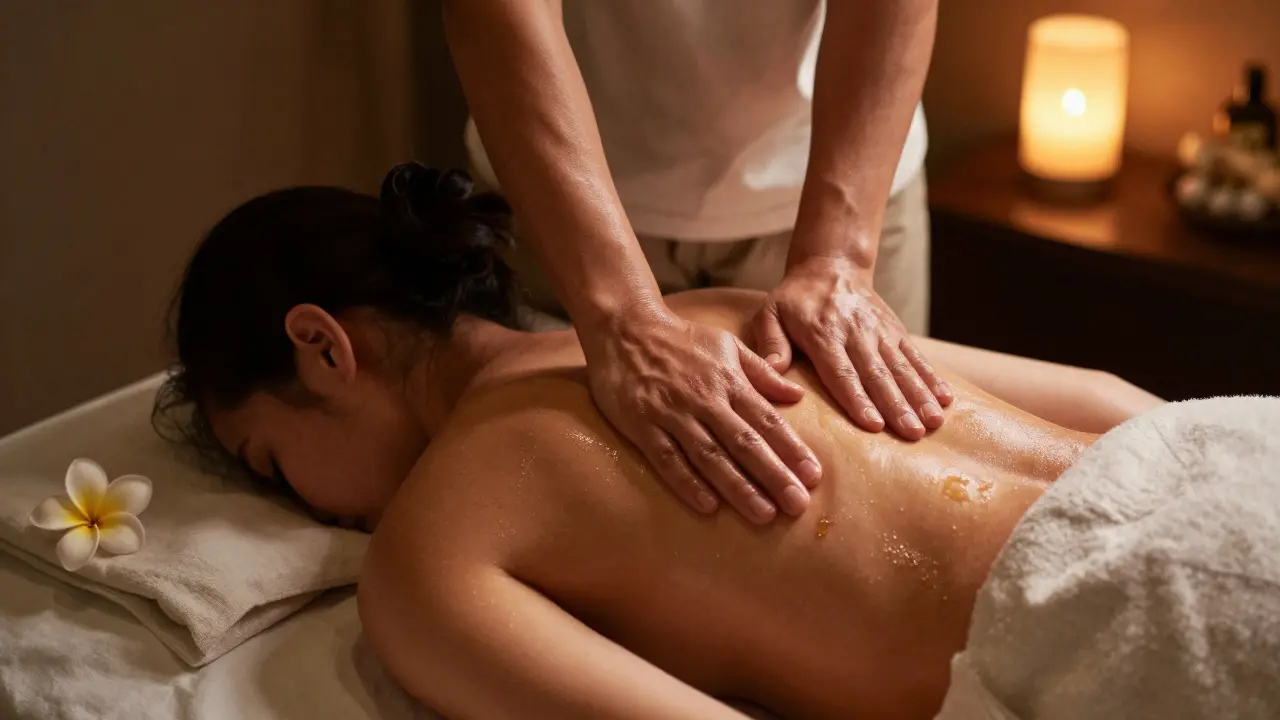
A lot of spas market Balinese massage as "lavender oil and gentle strokes." That’s not it. Yes, essential oils like frangipani, lemongrass, and ginger are used-but they’re not the main event. The real work happens through a combination of deep tissue manipulation, acupressure, and rhythmic stretching. Think of it less like a spa treatment and more like a targeted physical therapy session with a cultural twist. The oils help the hands glide, not to "energize your chakras."
A 2023 study from the University of Udayana in Bali tracked 120 clients over six weeks. Those who received authentic Balinese massage reported a 42% greater reduction in muscle tension compared to those who got standard Swedish massage-even when the Swedish session used the same oils. The difference? The pressure patterns, the joint mobilizations, the use of the therapist’s forearms and elbows. This isn’t about scent. It’s about mechanics.
Myth 2: It’s Too Painful for First-Timers
If you’ve been told to avoid Balinese massage because "it’s too intense," you’ve been misled. Yes, it can be deep. But it’s not meant to hurt. A skilled therapist adjusts pressure based on your body’s feedback, not a fixed formula. Unlike Thai massage, which often uses fixed stretches and floor work, Balinese massage is done on a table and follows your comfort level.
One common mistake? Clients tense up because they expect pain. That makes the massage less effective. The best sessions start light. The therapist checks in every 5-7 minutes: "Is this too much?" If you say yes, they back off. By the third session, most people find they can handle more-but only because their muscles have adapted, not because the technique changed.
Myth 3: It’s a Spiritual Ritual with Chakras and Energy Flow
This one’s tricky. Balinese culture is deeply spiritual. You’ll see offerings, incense, and chants in traditional settings. But in modern massage centers-even in Bali-the session is mostly physical. The spiritual elements are cultural context, not therapy. You won’t be "cleansing your aura" unless you specifically book a ceremonial session, which is rare and usually separate from standard massage offerings.
Real Balinese massage is rooted in traditional Javanese and Balinese healing practices that predate modern energy concepts. It draws from acupressure a technique that applies pressure to specific points on the body to relieve pain and tension, trigger point therapy a method targeting knots in muscles to reduce pain and improve mobility, and joint mobilization controlled movements to improve range of motion and reduce stiffness. These are evidence-based techniques, not mystical practices.
Myth 4: You Need to Be Flexible or in Great Shape
Another myth: you need to be limber, young, or athletic to benefit. That’s not true. Balinese massage is adaptable. The stretches are passive-meaning the therapist moves your limbs for you. You don’t have to do anything. A 72-year-old woman with arthritis in her shoulders got relief from weekly sessions. A 20-year-old desk worker with chronic neck pain found relief after three visits. The technique doesn’t care about your fitness level.
What matters is your ability to relax. If you’re stiff, the therapist uses pillows and bolsters to support your body. If you’re tight, they work slowly. No one is judged. No one is pushed beyond their limits. The goal is to release tension, not to turn you into a yoga instructor.
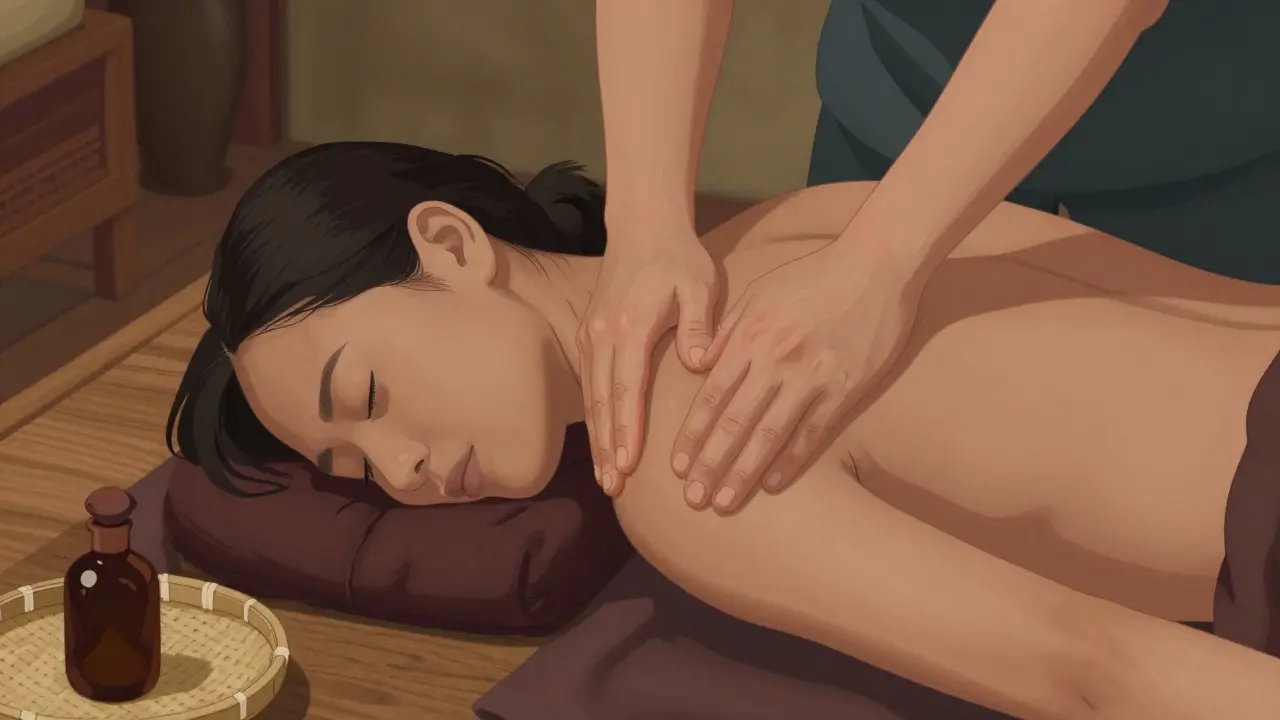
Myth 5: It’s Just a Tourist Thing-Not Real Traditional Therapy
Yes, Balinese massage is popular with tourists. But that doesn’t make it fake. In Bali, it’s still widely practiced in homes, temples, and local clinics. Families pass down the techniques through generations. The difference between a tourist spa and a local practitioner? Authentic sessions use hand-ground oils, natural fabrics, and longer sessions (90-120 minutes). Tourist spots often cut it to 60 minutes and use bottled oils.
Here’s what you won’t find in most resorts: the use of Bamboo massage a technique using heated bamboo rods to apply pressure and glide over muscles as a complementary method, or the inclusion of Breathing coordination synchronized breath patterns between therapist and client to enhance relaxation and muscle release. These are part of traditional practice but rarely included in commercial packages.
Myth 6: The Benefits Are All Psychological
"It’s just a fancy way to feel relaxed." That’s part of it-but not all. Studies show measurable physical changes. A 2024 clinical review in the Journal of Bodywork and Movement Therapies found that after four weekly Balinese massage sessions, participants had:
- 18% improvement in cervical spine mobility
- 23% reduction in cortisol levels (the stress hormone)
- 31% decrease in self-reported muscle pain
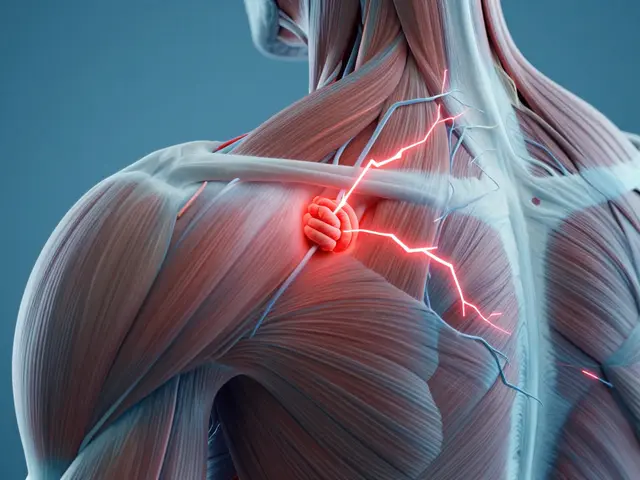
These aren’t placebo effects. The combination of deep pressure, joint movement, and rhythmic compression physically alters muscle tone and nervous system response. It’s not just "feeling good." It’s changing how your body functions.
What You Should Expect in a Real Session
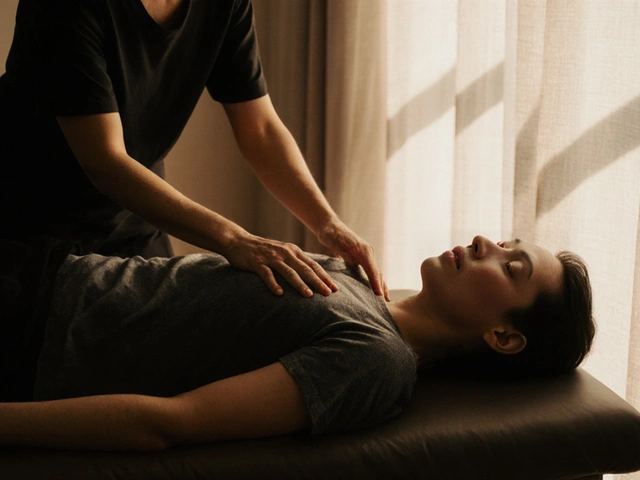
Here’s what actually happens in a 90-minute authentic Balinese massage:
- You lie on a low, padded table, covered with a warm cloth.
- The therapist starts with light effleurage (gliding strokes) to warm the skin and muscles.
- Then comes deep pressure using thumbs, knuckles, and forearms-especially on the back, shoulders, and legs.
- Joint mobilizations: gentle rocking of hips, shoulders, and ankles.
- Passive stretching: your limbs are moved slowly into stretches you couldn’t do yourself.
- Pressure applied along meridian lines (not chakras) to release tension.
- End with light tapping and a warm compress on the neck and feet.
The whole thing takes about 90 minutes. No music with chanting. No candles. Just quiet, focused work. The scent of oil is subtle. The touch is firm but never painful.
Who Should Avoid It?
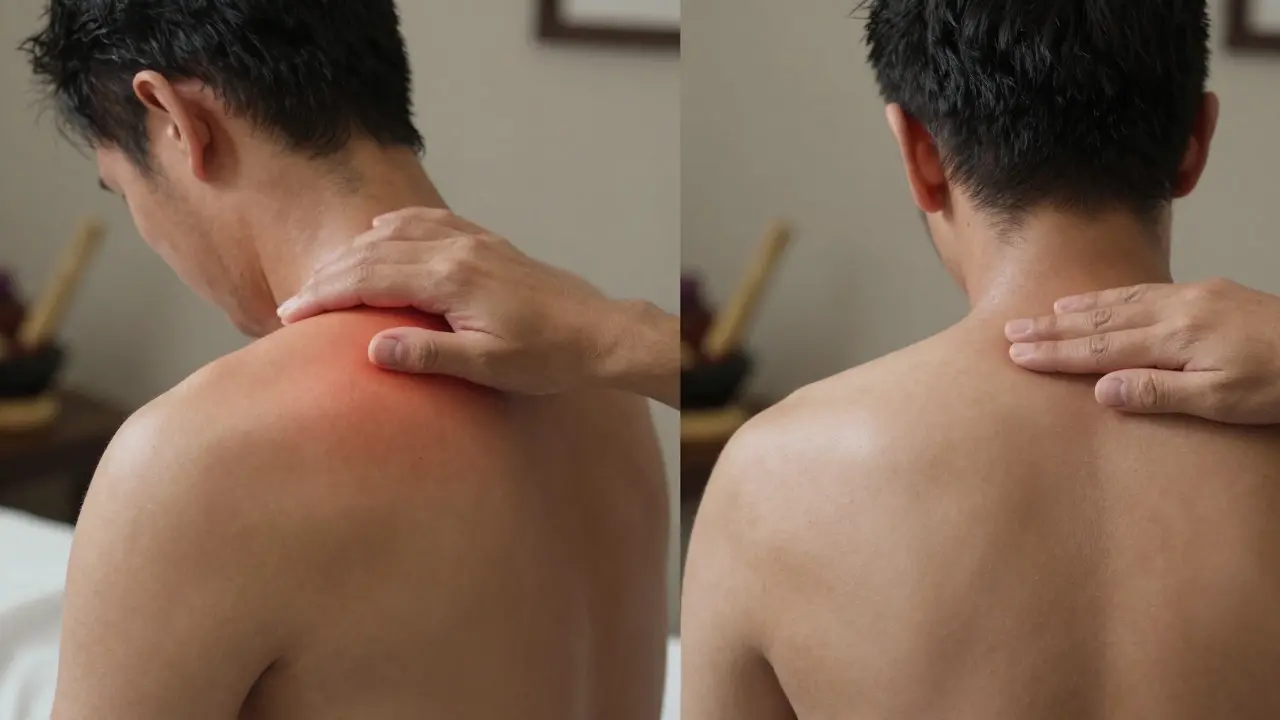
Not everyone should get this. Avoid Balinese massage if you:
- Have recent fractures or bone injuries
- Are in the first trimester of pregnancy (some therapists avoid it entirely)
- Have severe osteoporosis
- Have open wounds or infections on the skin
- Are on blood thinners and have uncontrolled clotting issues
If you’re unsure, talk to your doctor. This isn’t a risky treatment-but it’s not a massage for everyone.
How to Find an Authentic Practitioner
Not all "Balinese" massages are created equal. Here’s how to spot the real thing:
- Ask if they use traditional oils (frangipani, ginger, turmeric) made from fresh ingredients-not synthetic fragrance.
- Check session length. Authentic sessions are 90 minutes minimum.
- Look for therapists who use their forearms and elbows, not just hands.
- Ask if they incorporate joint mobilization. If they say "no," it’s probably a simplified version.
- Try to find someone trained in Bali or by a Balinese lineage. Many reputable therapists now train in Indonesia before working abroad.
Don’t be fooled by names like "Balinese Bliss" or "Tropical Harmony." Those are marketing terms. The real deal is quiet, focused, and physically effective.
Final Thought: It’s Not Magic. It’s Medicine.
Balinese massage isn’t mystical. It’s not a spa fantasy. It’s a practical, centuries-old system of bodywork that works because of pressure, movement, and timing-not because of incense or chanting. The myths exist because people want to believe it’s more than it is. But the truth is better: it’s simple, effective, and deeply human.
If you’re looking for relief from chronic tension, stiffness, or stress, give it a real try. Skip the hype. Find a skilled therapist. Let your body feel what it hasn’t felt in years.
Is Balinese massage the same as Thai massage?
No. Thai massage is done on a mat, involves yoga-like stretches, and often uses the therapist’s feet and knees. Balinese massage is done on a table, uses more hand and forearm pressure, and focuses on deep tissue and joint mobility without forced stretching. Thai massage is more active; Balinese is more passive and soothing.
Does Balinese massage help with back pain?
Yes. Studies show it’s particularly effective for lower back and shoulder tension. The combination of deep pressure on trigger points, joint mobilization, and passive stretching helps release chronic tightness that other massages often miss. Many physical therapists in Australia now recommend it as a complementary therapy for chronic back pain.
How often should I get a Balinese massage?
For general stress relief, once every 3-4 weeks works well. If you have chronic pain or tightness, weekly for 4-6 weeks, then monthly maintenance is common. Overdoing it can lead to soreness or bruising. Listen to your body-if you feel more tired than relaxed, take a break.
Can I get Balinese massage if I’m pregnant?
It’s generally safe after the first trimester, but only with a therapist trained in prenatal massage. The pressure should be lighter, and the positioning adjusted to avoid lying flat on the back. Always inform the therapist about your pregnancy. Avoid any deep abdominal work or intense stretching.
Do I need to undress completely?
No. You’ll be covered with a warm cloth at all times. Only the area being worked on is uncovered. Most people keep their underwear on. The therapist works around it. Comfort is more important than tradition.