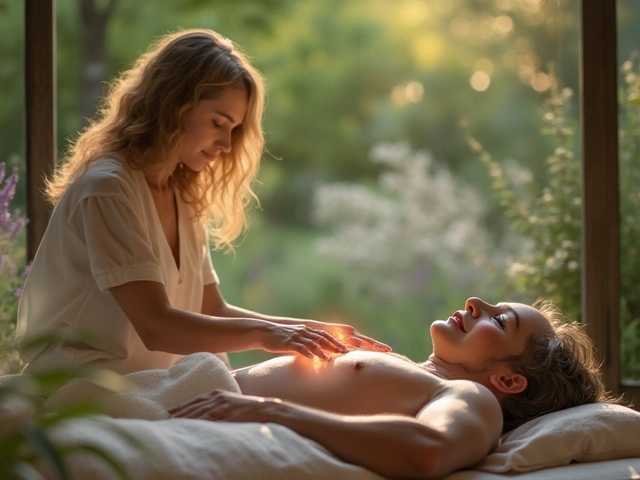
Breema: A Holistic Approach to Stress Management
Stress doesn’t just live in your mind-it settles in your shoulders, tightens your jaw, and turns your breath into shallow gasps. If you’ve tried meditation, yoga, or even therapy and still feel stuck, you might not be missing effort-you’re missing the right kind of touch. Breema is one of those quiet, overlooked practices that doesn’t shout for attention but quietly rewires how your body handles stress. It’s not a massage. It’s not yoga. It’s something deeper: a gentle, structured form of bodywork that brings you back to yourself without forcing you to change.
What Breema Actually Is
Breema (pronounced Breh-MAY-ah) is a system of bodywork and self-care developed in the 1970s by Jon Schreiber, based on principles from the Sufi tradition and his own experience as a physical therapist. It’s not spiritual in the way you might expect-there’s no chanting, no mantras, no belief system you have to adopt. Instead, it’s built on nine principles that guide how you move, touch, and relate to your body and others. These principles-like Body Comfortable, No Extra Effort, Mutual Participation-are designed to help you stop fighting your body and start cooperating with it.
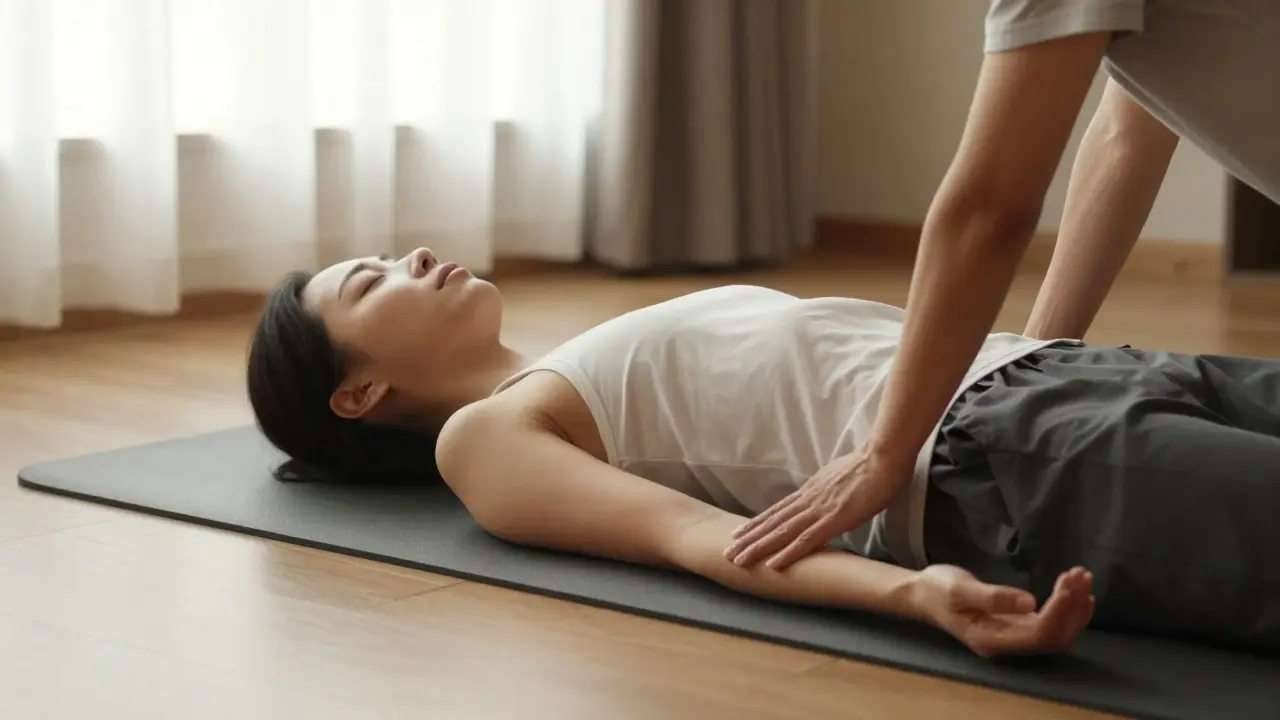
Most sessions are done on a firm mat, fully clothed. The practitioner uses their whole body-forearms, palms, elbows-to apply slow, steady pressure. The recipient doesn’t have to do anything except breathe and let go. No stretching, no twisting, no forcing. Just presence. And that’s the magic. Breema doesn’t ask you to fix yourself. It invites you to be with yourself.
How It Works on Stress
When you’re stressed, your nervous system stays stuck in fight-or-flight mode. Your muscles stay tense. Your breathing gets shallow. Your mind races. Traditional therapies often try to fix this by adding more effort: more exercise, more breathing techniques, more mindfulness drills. Breema does the opposite. It gives your nervous system permission to rest.
Studies on similar somatic therapies show that slow, rhythmic touch lowers cortisol levels and activates the parasympathetic nervous system-the part of your body that says, “It’s safe to relax.” Breema works the same way. The pressure is never aggressive. It’s consistent, warm, and grounding. It doesn’t push through tension; it holds space around it until the tension softens on its own.
One woman in Melbourne, who’d been dealing with chronic anxiety for years, started doing Breema twice a month. After six weeks, she noticed she stopped clenching her teeth at night. She didn’t feel the need to check her phone first thing in the morning. She didn’t need caffeine to get through the afternoon. “It wasn’t that the stress disappeared,” she told me. “It was that I stopped reacting to it like it was an emergency.”
Self-Breema: Doing It Yourself
You don’t need a practitioner to benefit from Breema. In fact, many people find the real shift happens when they start practicing Self-Breema-simple movements you can do alone, in under ten minutes. These aren’t stretches. They’re gentle, mindful actions that reconnect you with your body’s natural rhythm.
- Arm Sweep: Lie on your back. Slowly lift one arm overhead, letting it fall gently to the side. Repeat on the other side. Do this five times. Focus on the weight of your arm, not the motion.
- Leg Rock: Bend your knees, feet flat. Gently rock your knees side to side, letting your spine move naturally. No force. Just let gravity do the work.
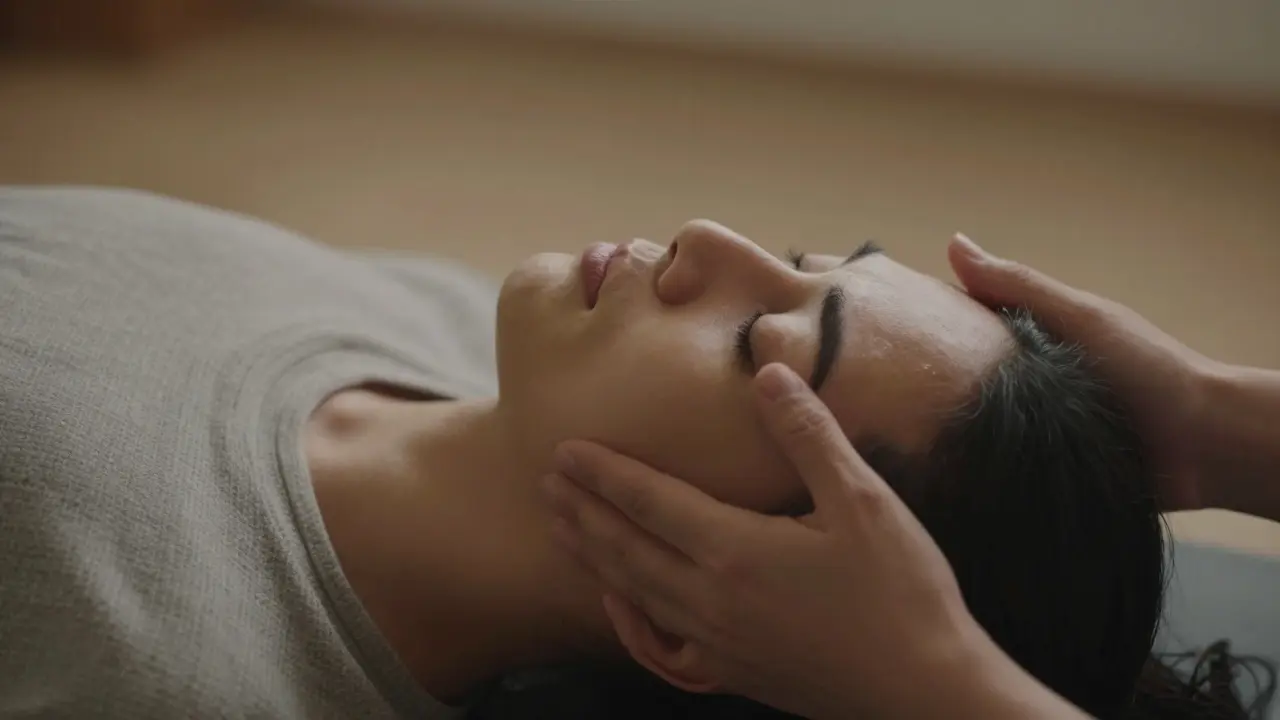
- Hand-to-Head: Place your palms on your temples. Breathe slowly. Hold for one minute. Don’t try to relax-just notice how your hands feel against your skin.
These aren’t exercises. They’re invitations. You’re not trying to “fix” anything. You’re just being with your body as it is. That’s enough.
Why It’s Different From Massage or Yoga
Massage often aims to release knots. Yoga often aims to stretch muscles. Breema doesn’t aim for results. It aims for connection. That’s why it’s not a quick fix. It’s a quiet reset.
With massage, you’re passive. You lie there while someone else works on you. With yoga, you’re often pushing yourself into poses, trying to improve. Breema removes both the pressure to perform and the pressure to be fixed. The practitioner moves with you, not for you. You’re not a problem to be solved-you’re a person to be held.
It’s also not tied to any culture or belief system. You don’t need to believe in energy channels, chakras, or karma. You just need to be willing to feel your body without judgment. That’s why it works for people who’ve tried everything else and still feel disconnected.
Who It’s For
Breema isn’t for everyone-but it’s for more people than you think.
- If you’re exhausted from trying to “optimize” your well-being, Breema gives you permission to stop.
- If you hate meditating because your mind won’t shut up, Breema doesn’t ask you to quiet your mind-it asks you to feel your feet.
- If you’ve been told to “just breathe” and it didn’t help, Breema gives you something tangible to do: a slow hand on your ribs, a gentle rock of your knees.
- If you’re recovering from injury, illness, or burnout, Breema’s gentle touch is safe and soothing.
- If you’re a caregiver, a nurse, a parent, or someone who spends all day giving to others, Breema helps you come back to yourself without needing more time or money.
It’s not a cure. It’s a return. A return to the quiet, steady rhythm your body knows how to maintain-if only you’d stop interrupting it.
Finding a Practitioner
Breema isn’t widely known, but it’s growing. In Australia, certified practitioners are mostly in Melbourne, Sydney, and Brisbane. You can find them through the Breema Center website, which lists trained instructors worldwide. Sessions usually last 60 to 75 minutes and cost between $80 and $120.
Look for someone who’s certified by the Breema Center. Training is rigorous-practitioners complete over 200 hours of study, including anatomy, principles, and supervised practice. Avoid anyone who calls it “energy work” or promises spiritual awakening. Breema is grounded in physical presence, not metaphysics.
Many practitioners offer group classes or introductory workshops. These are a great way to try it without committing to a full session. You’ll often find them offered through community centers, yoga studios, or holistic health clinics.
What to Expect in Your First Session
You’ll arrive wearing loose, comfortable clothing. No oils, no music, no candles. The room is quiet, warm, and simple. You’ll lie on a firm mat while the practitioner begins with light contact-maybe a hand on your shoulder, then a slow sweep along your arm. The pressure is always adjustable. If it’s too much, say so. If it’s too little, ask for more.
You might feel warmth. You might feel nothing at first. That’s okay. Some people cry. Some people fall asleep. Some just notice how their breathing changed. There’s no right way to respond. The goal isn’t to feel something. The goal is to be there.
Afterward, you might feel lighter. Or you might feel nothing at all. That’s normal. The effects often build over time. One session won’t fix your stress. But five sessions? That’s when people start saying, “I didn’t realize how much tension I was carrying.”
Why It Matters Now
We live in a world that rewards doing over being. Productivity is worshipped. Rest is seen as lazy. We’re told to meditate more, move more, eat better, sleep more-but rarely are we told it’s okay to just be still, without a goal.
Breema doesn’t ask you to change. It doesn’t ask you to be better. It asks you to be present. And in a world that never stops demanding more, that’s revolutionary.
You don’t need to understand it. You don’t need to believe in it. You just need to try it once. Lie down. Breathe. Let someone hold you gently. And see what happens when you stop trying to fix yourself.
Is Breema a form of massage?
No, Breema is not massage. While both involve touch, massage typically focuses on releasing muscle tension through kneading or deep pressure. Breema uses slow, rhythmic, full-body contact based on nine principles of harmony. It’s not about manipulating tissue-it’s about creating a shared space of presence between giver and receiver.
Do I need to be flexible or fit to try Breema?
No. Breema is designed for all bodies, regardless of age, fitness, or mobility. Sessions are done fully clothed on a mat, and movements are gentle and adaptable. Whether you’re recovering from surgery, sitting in a wheelchair, or just feeling stiff from sitting all day, Breema meets you where you are.
Can I do Breema on my own?
Yes. Self-Breema is a core part of the practice. Simple movements like arm sweeps, leg rocks, and hand-to-head holds take less than ten minutes and can be done anywhere. These aren’t exercises-they’re ways to reconnect with your body without effort or expectation.
How often should I do Breema?
There’s no set rule. Some people benefit from weekly sessions, especially during high-stress periods. Others find monthly sessions enough to stay grounded. For Self-Breema, even five minutes a day can make a difference. Consistency matters more than duration.
Is Breema spiritual or religious?
Breema comes from Sufi roots, but it’s not spiritual in the traditional sense. There’s no dogma, no belief system, and no requirement to adopt any philosophy. The nine principles are practical guidelines for how to move and touch with awareness. People of all faiths-or none-find it helpful.