
Unleashing the Power of Rolfing for Body Balance
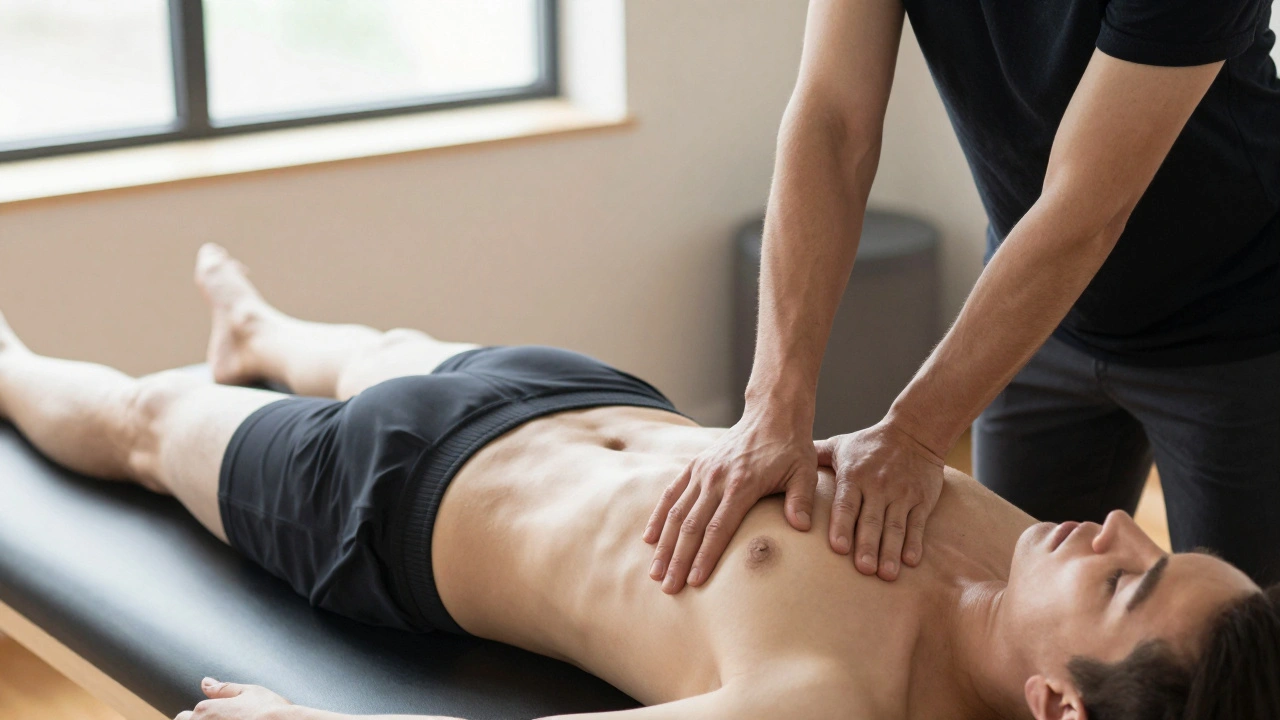
Most people think of posture as something you fix by standing up straighter. But if you’ve ever tried to just ‘pull your shoulders back’ and felt it didn’t last, you know it’s not that simple. Your body isn’t a puppet with loose strings-it’s a tensegrity structure, where every muscle, tendon, and connective tissue pulls on everything else. That’s where rolfing comes in. Unlike massage that targets sore spots, rolfing works on the deeper web of connective tissue called fascia to realign your whole body. It’s not magic. It’s mechanics.
What Rolfing Actually Does
Rolfing, also known as Structural Integration, was developed by Dr. Ida Rolf in the 1950s. She noticed that people who moved with ease-dancers, athletes, even children-had bodies that were vertically aligned. Their weight dropped naturally through their skeleton, not their muscles. Her insight? When fascia gets stuck from injury, stress, or poor habits, it pulls your body out of balance. Rolfing uses deep, slow pressure to release these restrictions. Think of it like untangling a knotted rope. You don’t just pull on one end-you work through the whole length until it flows freely again.
Most people come to rolfing because of chronic pain-lower back pain, tight hips, shoulder stiffness. But what they often don’t realize is that the pain isn’t the problem. It’s the symptom. The real issue is misalignment. Your left hip might be rotated forward because your right calf is tight. Your neck aches because your pelvis is tilted. Rolfing doesn’t just massage the pain away. It rewires how your body holds itself.
The 10-Session Series: How It Works
Rolfing isn’t a one-off treatment. It’s a structured 10-session process, each session building on the last. It’s not arbitrary. Each session targets a specific layer of fascia and a specific region of the body, following a logical sequence.
- Session 1: Focuses on the outer layers of the body-breathing, feet, and the superficial fascia of the legs. You start by learning how to ground yourself.
- Session 2: Works on the lateral lines-sides of the body, ribs, and arms. This helps you stop leaning to one side.
- Session 3: Targets the front of the body-the chest, abdomen, and inner thighs. Many people carry tension here from sitting too long.
- Session 4: Addresses the back of the body-spine, hamstrings, and calves. This is where most people hold their stress.
- Session 5: Integrates the pelvis and core. This is often the turning point. People start to feel taller.
- Session 6: Works on the neck, head, and shoulders. Many report feeling lighter after this session.
- Session 7: Deepens the work on the legs and feet, improving how you push off when walking or running.
- Session 8: Refines the spine and ribcage, allowing for fuller breath and better posture.
- Session 9: Balances the entire structure. Any remaining asymmetries are addressed.
- Session 10: Integrates everything. You walk out feeling like your body finally makes sense.
Each session lasts 60 to 90 minutes. You’re fully clothed, usually in underwear or shorts. The practitioner uses their hands, elbows, and sometimes forearms to apply pressure. It’s not meant to be painful, but it can be intense. Some compare it to a deep stretch that lasts for minutes. After each session, you’re encouraged to walk around, drink water, and notice how your body feels differently.
Why Fascia Matters More Than You Think
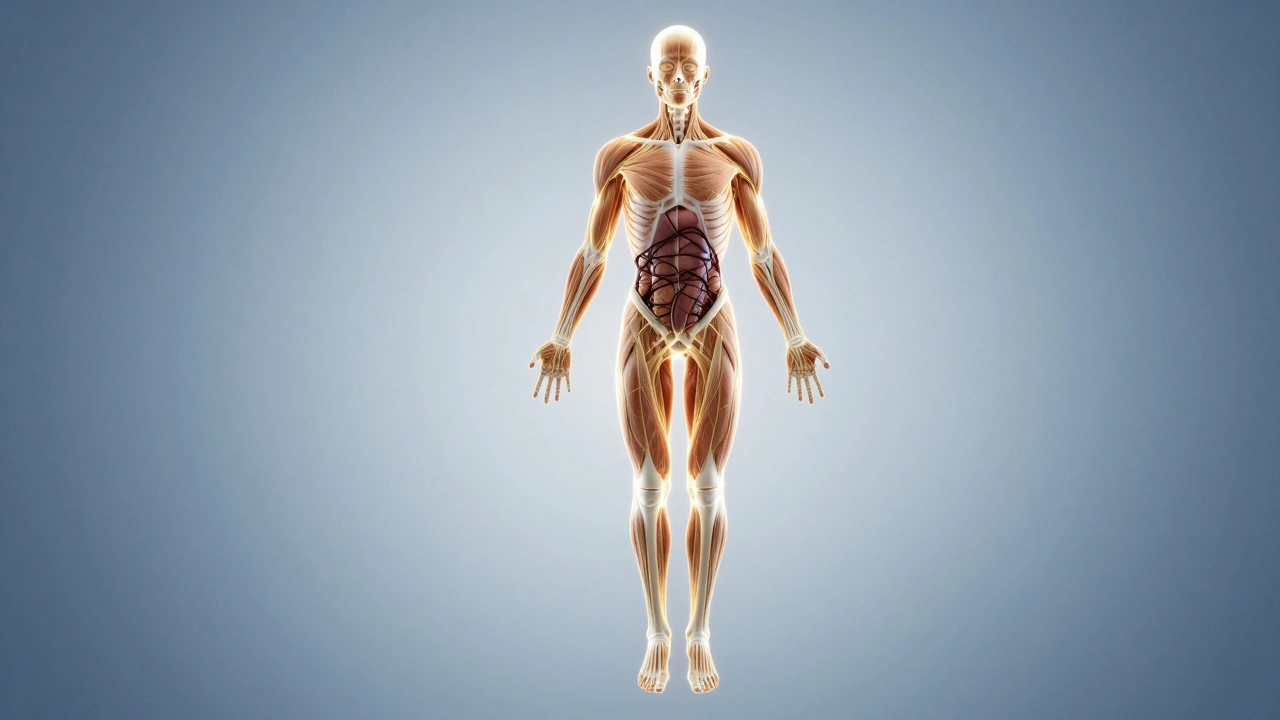
Fascia is the unsung hero of your body. It’s a continuous web of collagen and elastin that wraps every muscle, organ, nerve, and bone. It’s not just padding-it’s your body’s communication network. When fascia is healthy, it slides smoothly. When it’s dehydrated or stuck from injury or inactivity, it turns into glue. That’s when you get stiffness, reduced range of motion, and pain that moves around.
Studies from the Journal of Bodywork and Movement Therapies show that people who complete a full rolfing series report up to 40% improvement in posture and 30% reduction in chronic pain after six months. That’s not placebo. It’s measurable. MRI scans have shown changes in fascial thickness and alignment after rolfing sessions. Your body literally reorganizes itself.
Think of your fascia like a spiderweb. If one strand tightens, the whole structure shifts. Rolfing doesn’t just loosen one strand-it rewires the whole pattern. That’s why you don’t just feel better in your back. You notice your shoulders drop. Your feet feel more connected to the ground. Your breathing deepens. Your whole system resets.
Who Benefits Most from Rolfing?
Rolfing isn’t just for athletes or people in pain. It’s for anyone who’s ever felt like their body doesn’t work the way it should.
- Office workers who sit all day and feel permanently hunched
- Runners with recurring shin splints or plantar fasciitis
- Mothers carrying children on one hip, leading to hip and lower back pain
- Older adults who feel stiff, unsteady, or like they’re shrinking
- Dancers, yogis, and performers who want to move with more ease and less effort
One client, a 58-year-old librarian, came in with sciatica and a diagnosis of ‘degenerative disc disease.’ She’d tried physical therapy, acupuncture, and painkillers. Nothing stuck. After session three of rolfing, she could stand in line at the grocery store without gripping the cart. By session seven, she was walking her dog three miles a day. She didn’t get ‘cured.’ She got realigned.
Rolfing vs. Massage vs. Chiropractic
People often confuse rolfing with other bodywork. Here’s how it’s different:
| Approach | Focus | Duration | Goal | Typical Sensation |
|---|---|---|---|---|
| Rolfing | Fascia and whole-body alignment | 10-session series | Long-term structural change | Deep, sustained pressure; may feel intense but not sharp |
| Massage Therapy | Muscle relaxation | Single session or weekly | Temporary relief | Relaxing, soothing, kneading |
| Chiropractic | Joint alignment, especially spine | Multiple visits | Immediate joint mobility | Popping or cracking; quick adjustment |
Massage feels good in the moment. Chiropractic gives quick relief. Rolfing changes how your body works long-term. It doesn’t just fix what’s broken-it rebuilds how you hold yourself together.
What to Expect After a Session
You won’t feel like you’ve been through a workout-unless you actually were. But you might feel strange. Some people feel lighter. Others feel tired, as if their body is reorganizing. That’s normal. Your nervous system is recalibrating. Your brain is learning a new way to hold your body.
For the first 24 to 48 hours after a session, drink extra water. Move gently. Walk. Avoid heavy lifting or intense workouts. You might notice your posture shifting naturally. You might find yourself standing taller without thinking. Your shoes might feel different. That’s your body adjusting to its new alignment.
Some people feel emotional. Fascia stores memories. A tight chest might release not just physical tension, but old grief. A locked hip might unlock a long-buried sense of freedom. That’s not mystical. It’s neuroscience. Your body and mind are wired together.
Is Rolfing Right for You?
Rolfing isn’t for everyone. If you have osteoporosis, recent fractures, or active cancer, it’s not safe. If you’re pregnant, wait until after delivery. If you’re looking for a quick fix, this isn’t it. But if you’re tired of treating symptoms and want to fix the root cause-your body’s structure-then rolfing might be the missing piece.
Start with one session. See how your body responds. Most certified Rolfers offer a free 15-minute consultation. Ask if they’re certified by the Rolf Institute of Structural Integration. That’s the gold standard. Avoid practitioners who promise miracles or skip the 10-session structure.
It’s not cheap. Sessions range from $120 to $200 depending on location. But consider this: if you’ve spent $2,000 on painkillers, physical therapy, and massage over the past year, rolfing might save you more than money-it might save you your mobility.
Real Change, Not Temporary Relief
People don’t come back to rolfing because they liked the massage. They come back because they feel like they’ve been given back their body. One woman, a former dancer, said after her tenth session: ‘I didn’t realize I’d been walking with my spine bent until I could stand straight without trying.’
That’s the power of rolfing. It doesn’t ask you to push harder. It doesn’t tell you to stretch more. It lets your body find its natural balance. And once it does, you don’t have to remember to be upright. You just are.
Is rolfing painful?
Rolfing isn’t meant to be painful, but it can be intense. The pressure is deep and slow, targeting fascial restrictions that have built up over years. Most people describe it as a ‘good hurt’-like a deep stretch that lasts. If it feels sharp, burning, or unbearable, speak up. A good practitioner will adjust. Pain isn’t progress-it’s a warning.
How long do the results last?
Results from a full 10-session series typically last years, especially if you stay active and mindful of your posture. Unlike massage or chiropractic adjustments that need frequent repeats, rolfing changes the structure of your body. Many clients report lasting improvements for 5 to 10 years. Maintenance sessions every 6 to 12 months can help keep things aligned.
Can I do rolfing if I’m not in pain?
Absolutely. Many people use rolfing for performance, not pain relief. Athletes, dancers, and musicians use it to improve movement efficiency. Office workers use it to prevent future injury. Even people with no pain report feeling more grounded, confident, and alive after a series. It’s about optimizing how your body works, not just fixing what’s broken.
Do I need to do all 10 sessions?
You don’t have to, but you’ll get the most benefit if you do. The sessions are designed to build on each other. Skipping sessions is like painting a house without priming the walls-you’ll see some improvement, but it won’t hold. Most practitioners recommend completing the full series for lasting change. If cost or time is an issue, talk to your practitioner. Some offer modified packages.
How do I find a certified rolfing practitioner?
Look for practitioners certified by the Rolf Institute of Structural Integration (RISI). They’re the original and most respected training program. You can search their directory online. Avoid practitioners who call themselves ‘rolfers’ without certification. Training varies widely, and certification ensures they’ve completed 700+ hours of hands-on training and anatomy study.
Next Steps: Try One Session
If you’ve read this far, you’re already curious. That’s the first step. Don’t overthink it. Book one session. See how your body responds. You don’t need to commit to ten. Just let your body tell you what it needs. Most people walk out of their first session feeling taller, lighter, or just… more like themselves. And that’s the point. Rolfing doesn’t give you a new body. It helps you find the one you already have.