The Tranquil World of Lomi Lomi Massage
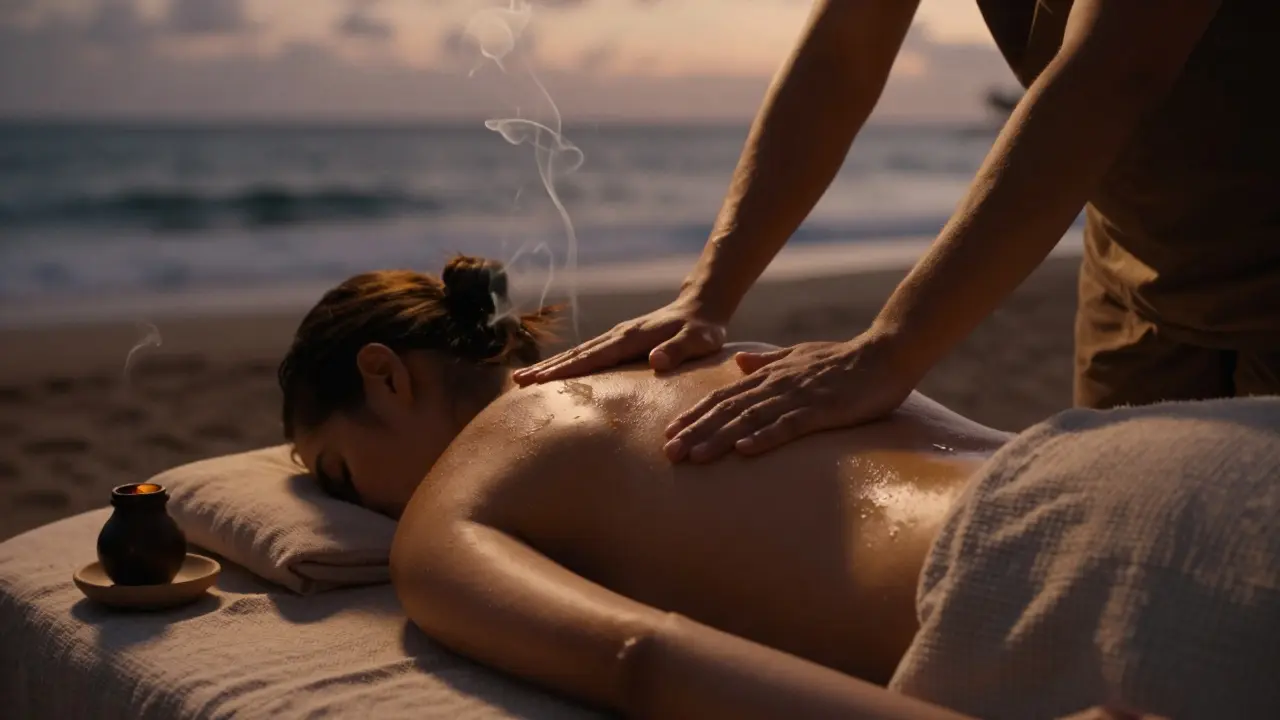
Imagine a massage that doesn’t just relax your muscles-it dissolves tension like tide pulling back from shore. No loud music. No forced pressure. Just flowing, rhythmic strokes that feel less like a treatment and more like a warm embrace from the ocean itself. This is lomi lomi massage, a practice born from ancient Hawaiian wisdom, passed down through generations, and still practiced today with deep reverence.
What Is Lomi Lomi Massage?
Lomi lomi isn’t just another type of bodywork. It’s a spiritual and physical ritual. The word itself, in the Hawaiian language, means "to knead" or "to rub gently." But the practice goes far beyond touch. Traditional lomi lomi was performed by kahunas-Hawaiian healers-who believed the body held emotional and ancestral memories. Their hands moved not just to release tight muscles, but to clear energetic blockages, restore balance, and reconnect the person to their inner peace.
Unlike Swedish or deep tissue massage, lomi lomi doesn’t follow a set sequence. Each session is unique, guided by the practitioner’s intuition and the client’s energy. The therapist often uses their forearms, elbows, and even their whole hands in long, fluid strokes that cover large areas of the body at once. It’s not about working on one tight spot-it’s about moving energy across the entire system.
The Rhythm of Healing
One of the most striking things about lomi lomi is its rhythm. Practitioners move like dancers, flowing from back to shoulders, down to legs, then back up again. This rhythm isn’t random. It’s based on the natural cycles of breath and ocean waves. Many therapists say they tune into the client’s breathing and match their strokes to it. When you’re lying there, you don’t just feel the massage-you feel the pulse of the moment.
This rhythm is what makes lomi lomi so deeply calming. It doesn’t ask you to relax. It invites you into stillness. There’s no clock ticking. No need to "let go"-because the motion itself carries you there. People often describe falling into a light, dreamlike state halfway through. Some wake up crying. Others don’t remember falling asleep. That’s not unusual. The body doesn’t just release physical tension-it lets go of old emotions too.
Tools and Techniques
Traditional lomi lomi uses no oils made from synthetic chemicals. Instead, practitioners use natural oils like macadamia nut, coconut, or kukui nut oil-ingredients native to Hawaii. These oils aren’t just for glide. They’re chosen for their healing properties. Kukui nut oil, for example, has been used for centuries to soothe skin and reduce inflammation.
The massage is often done with the client lying on a padded mat on the floor, not a table. This allows the therapist to move around the body more freely and connect more deeply with the energy flow. Some therapists sing or chant softly during the session, using Hawaiian chants called oli to set a sacred tone. These aren’t performances-they’re prayers for healing.
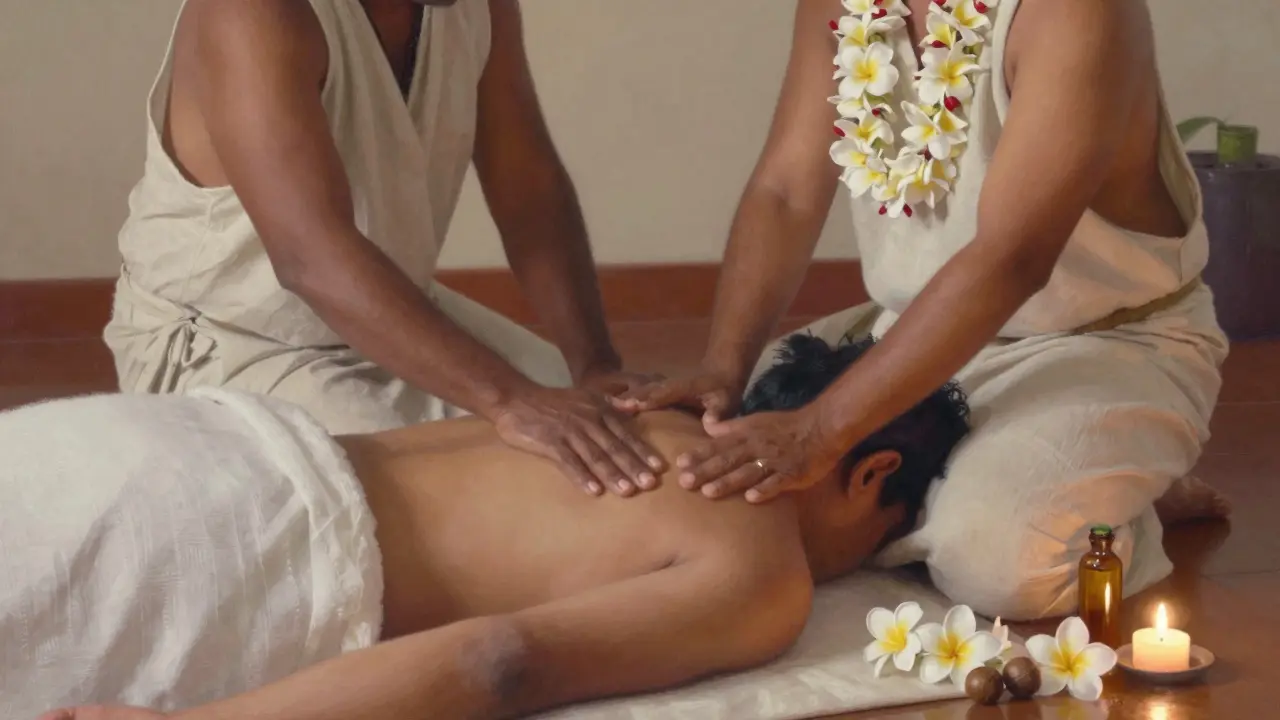
One of the most unique aspects? Many practitioners work with two hands at once, sometimes even with a second therapist. This creates a symphony of touch-one hand grounding while the other lifts, one arm releasing tension while the other invites warmth. It feels like being held by the earth and the sky at the same time.
Who Benefits Most?
Lomi lomi isn’t for everyone-but it’s perfect for those who’ve tried everything else and still feel stuck. If you’ve had deep tissue massages that left you sore, or Swedish massages that felt too light, lomi lomi might be the middle ground you’ve been searching for.
It’s especially powerful for people carrying emotional weight. Grief, burnout, chronic stress, or even unresolved trauma can show up as physical tightness in the shoulders, back, or jaw. Lomi lomi doesn’t dig into those areas aggressively. Instead, it surrounds them with warmth and movement, letting the body decide when and how to release.
People with anxiety often report feeling safer during lomi lomi than in other therapies. The non-invasive, flowing nature of the touch creates a sense of being held without pressure. It’s not about fixing you. It’s about reminding you that you’re already whole.
What to Expect in Your First Session
If you’ve never tried lomi lomi, here’s what usually happens. You’ll lie on a warm mat, covered with a soft cloth. The room is dim, quiet, and scented lightly with natural oils or incense. The therapist may ask you to set an intention-something simple like "peace," "release," or "connection." They don’t need details. Just a word.
Then, they begin. The first strokes are gentle, almost like a breeze. You might feel warmth spreading through your back. Your breath slows. Your thoughts drift. After 15 or 20 minutes, you might not even realize you’ve stopped thinking about your to-do list.
A full session lasts 60 to 90 minutes. There’s no talking. No feedback requested. Just surrender. When it’s over, you’ll likely feel lighter-not just physically, but emotionally. Some people say they feel like they’ve been hugged by the ocean.

How It Differs From Other Massages
Let’s be clear: lomi lomi isn’t just "Hawaiian massage." Many spas offer "Hawaiian-style" treatments that use coconut oil and slow strokes. But that’s not lomi lomi. True lomi lomi carries cultural depth, spiritual intention, and ancestral knowledge.
Compare it to Swedish massage: that’s about relaxation through technique. Deep tissue? It’s about breaking up knots. Lomi lomi? It’s about returning to harmony. You don’t need to be in pain to benefit. You just need to be ready to let go.
And unlike reflexology or acupressure, lomi lomi doesn’t focus on pressure points. It works with the whole body as one connected system. The hands move like rivers-finding the path of least resistance, not forcing change.
Where to Find Authentic Lomi Lomi
Authentic lomi lomi is rare outside of Hawaii. Many practitioners train for years under master kahunas. If you’re looking for a real experience, seek out someone who can speak about their lineage or training. Ask if they learned from a Hawaiian elder. Ask if they’ve been initiated into the practice. A good therapist won’t just say "I do lomi lomi." They’ll tell you how it was passed to them.
Some therapists now offer virtual sessions with guided breathing and energy work, but nothing replaces the physical presence of the hands. If you can, travel to Hawaii. Even a single session there-on the island, under the same sky that birthed the practice-can change how you see healing.
Why It Still Matters Today
In a world that demands speed, productivity, and constant connection, lomi lomi offers something radical: permission to be still. It doesn’t ask you to meditate. It doesn’t require journaling. It just asks you to lie down-and let the rhythm carry you.
It’s not a cure. It’s a return. A return to your body’s natural rhythm. To your breath. To the quiet place beneath all the noise. In a time when so many therapies focus on fixing, lomi lomi reminds us that sometimes, healing is simply about being held.
Is lomi lomi massage painful?
No, lomi lomi is not meant to be painful. Unlike deep tissue massage, it uses gentle, flowing pressure rather than focused force. Some people feel deep emotional release, which can bring tears or strong sensations, but physical pain is not part of the experience. If you feel discomfort, the therapist will adjust their touch immediately.
How often should you get lomi lomi massage?
There’s no set rule. Some people benefit from monthly sessions to maintain emotional balance. Others find that one session every few months is enough to reset their nervous system. If you’re going through a stressful time, weekly sessions for a month can create lasting shifts. Listen to your body-it will tell you when it’s time to return.
Do you need to be spiritually inclined to benefit from lomi lomi?
No. While lomi lomi has spiritual roots, you don’t need to believe in energy, chakras, or Hawaiian gods to feel its effects. Many people who are skeptical at first still report deep relaxation, emotional release, and improved sleep. The physical rhythm of the massage alone can quiet the mind, regardless of belief.
Can lomi lomi help with chronic pain?
Lomi lomi isn’t a treatment for structural issues like herniated discs or arthritis. But many people with chronic tension-related pain-like tight shoulders from stress or lower back pain from emotional holding-report significant relief. It doesn’t fix the cause, but it helps the body release the patterns of guarding that make pain worse.
What should I wear during a lomi lomi session?
Most practitioners work with clients draped in a cloth, and you’ll be covered at all times. You can choose to wear underwear, a swimsuit, or go completely nude-whatever makes you feel most comfortable. The therapist will only uncover the area they’re working on, and they’ll always respect your boundaries.