The Role of Palliative Massage in Modern Healthcare
When someone is facing a serious illness, pain isn’t the only thing they carry. There’s anxiety, fatigue, isolation, and the quiet weight of uncertainty. In modern healthcare, we’ve gotten better at treating disease-but not always at treating the person behind it. That’s where palliative massage steps in. It doesn’t cure cancer. It won’t reverse heart failure. But for many people in advanced illness, it’s one of the few things that makes them feel human again.
What Is Palliative Massage?
Palliative massage is a gentle, adapted form of touch therapy designed for people with life-limiting conditions. It’s not deep tissue work. It’s not a full-body relaxation session at a luxury spa. It’s slow, intentional, and tailored to the body’s limits. A therapist might use light strokes over the arms or legs, soft pressure on the hands, or just a warm blanket held gently against the back. The goal isn’t to fix anything. It’s to comfort.
Unlike standard massage therapy, which often targets muscle tension or athletic recovery, palliative massage responds to symptoms like pain, nausea, shortness of breath, and emotional distress. Studies from the Journal of Pain and Symptom Management show that even 15 minutes of gentle touch can reduce cortisol levels and increase serotonin in patients with advanced cancer. It doesn’t eliminate pain-but it changes how the body experiences it.
How It Works in Real Life
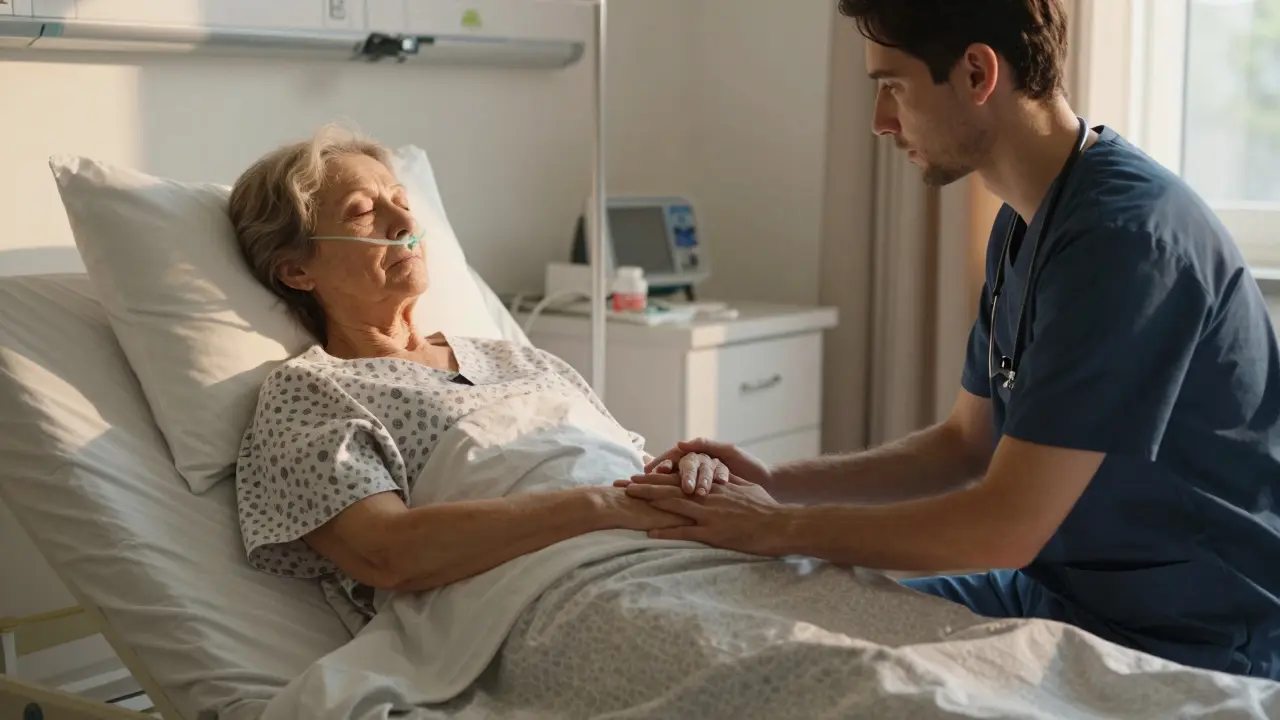
Imagine a woman in her late 60s with metastatic lung cancer. She’s on oxygen, can’t sleep through the night, and feels too weak to sit up. Her family is exhausted. One afternoon, a trained palliative massage therapist comes in. She sits beside the bed, asks if it’s okay to touch the hands, and begins with slow, warm strokes. No oils. No music. Just presence.
After 20 minutes, the woman’s breathing slows. Her fingers relax. She whispers, “I forgot what it felt like to be held.” That moment isn’t magic. It’s science. Touch activates the parasympathetic nervous system-the part of your body that says, “You’re safe now.” For someone constantly in fight-or-flight mode, that shift matters.
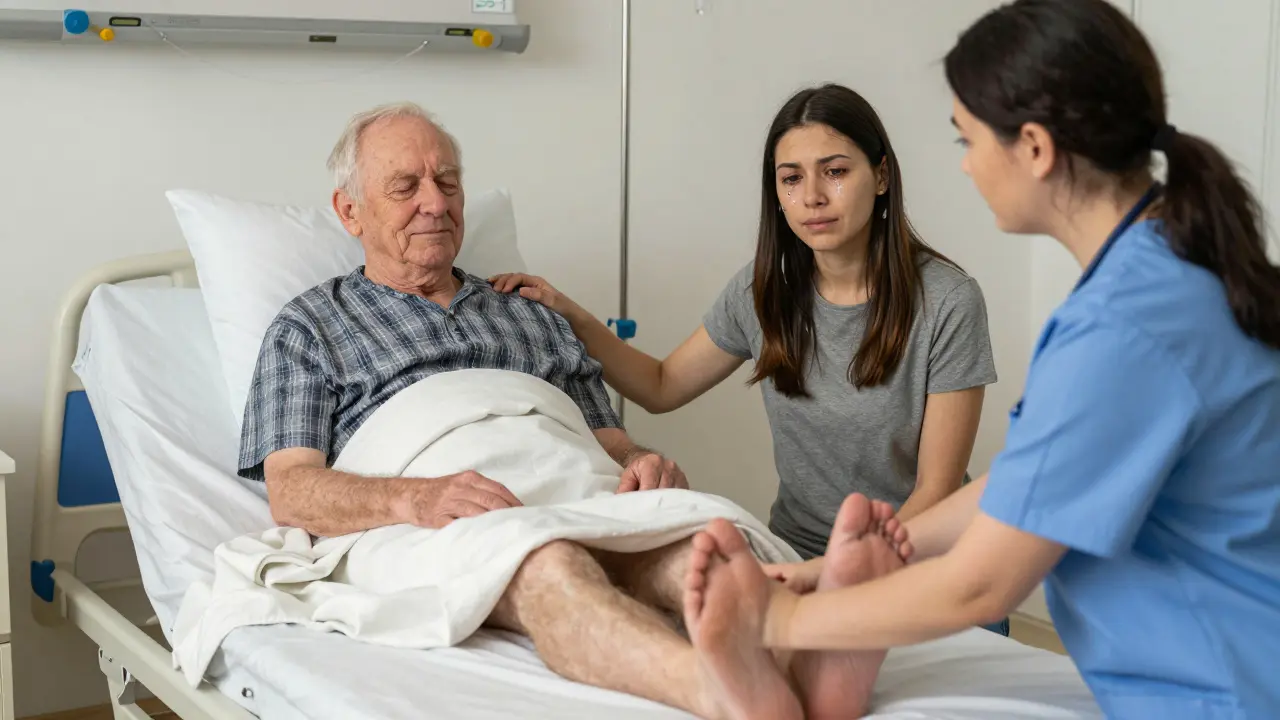
Another patient, a man with advanced dementia, stopped speaking months ago. His family worried he didn’t know who they were. During a massage session, the therapist gently rubbed his feet. He didn’t say a word. But his eyes softened. He let out a breath he hadn’t released in days. His daughter cried-not because he spoke, but because she saw him again.
Who Benefits Most?
Palliative massage isn’t just for cancer patients. It helps people with:
- End-stage heart or kidney disease
- Neurodegenerative conditions like ALS or Parkinson’s
- Advanced dementia
- Chronic pain syndromes that no longer respond to medication
- Children with life-limiting illnesses
It’s also used in hospice centers, hospital palliative care units, and even at home. In Australia, programs like those run by Palliative Care Victoria and St Vincent’s Hospice now include massage as a standard offering-not a luxury. Nurses report patients needing less pain medication after sessions. Families say their loved ones seem calmer, more present.
What’s Different About the Technique?
You won’t see a palliative massage therapist using deep pressure or aggressive stretching. That could hurt. Instead, they use:
- Light effleurage (long, gliding strokes)
- Minimal pressure-often just the weight of their palms
- Warmth from heated blankets or hands
- Focus on areas that are accessible and comfortable (hands, feet, head, back)
- Adaptation for fragile skin, IV lines, or oxygen tubes
They also watch closely. If a patient flinches, they stop. If they sigh, they keep going. It’s not about following a script. It’s about listening with your hands.
Training for this work is specific. Therapists learn about disease progression, medication side effects, and how to communicate with non-verbal patients. Many complete certification through organizations like the International Association for Massage in Palliative and Hospice Care. It’s not just a skill-it’s a form of emotional labor.
Why Isn’t It More Common?
Despite the evidence, palliative massage is still underused. Many hospitals don’t have trained staff. Insurance rarely covers it. Some doctors still see it as “nice but unnecessary.” But that’s changing.
In the U.S., the National Hospice and Palliative Care Organization now lists touch therapy as a recommended non-pharmacological intervention. In the UK, the NHS has piloted massage programs in several hospices with measurable drops in anxiety scores. Here in Adelaide, the Royal Adelaide Hospital added a part-time palliative massage therapist in 2024 after patient surveys showed it was one of the top requested services-not ranked by doctors, but by families.
The biggest barrier isn’t cost. It’s perception. People think massage is for relaxation, not for dying. But that’s the point. It’s not about fixing. It’s about being with someone when they can’t be fixed.
The Ripple Effect
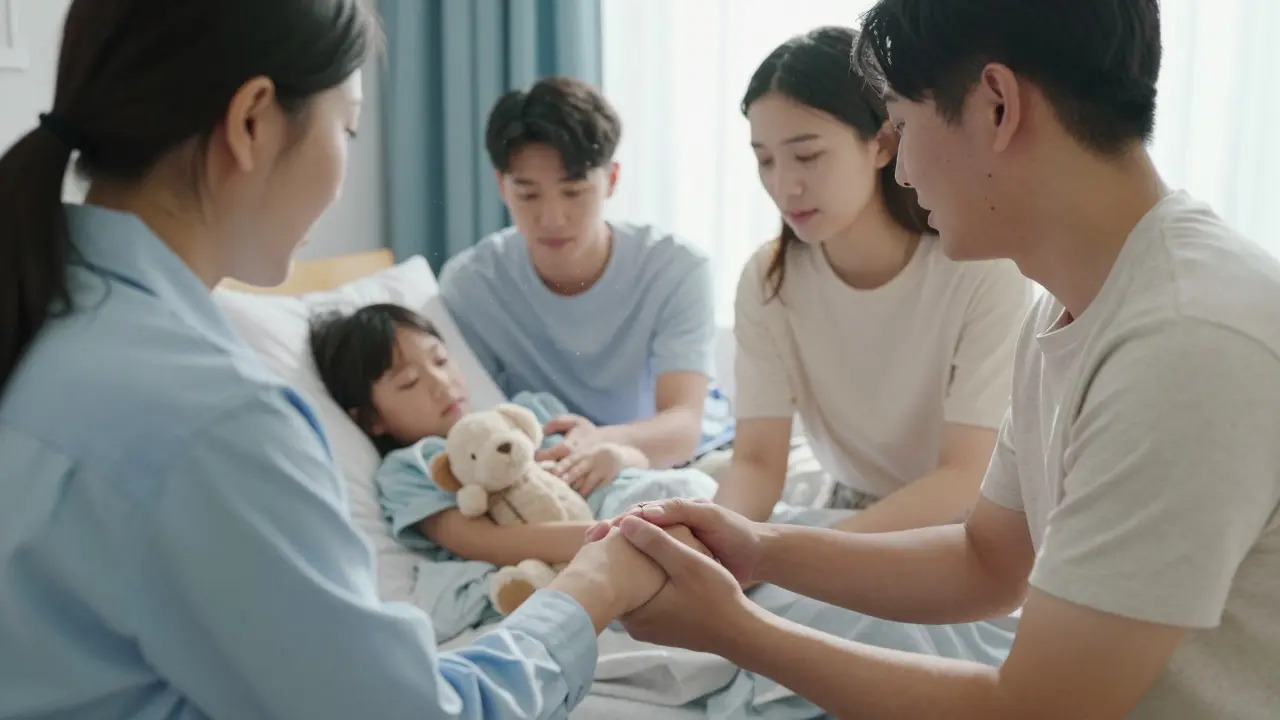
Palliative massage doesn’t just help the patient. It helps the people around them.
Families often feel helpless. They want to do something, but they don’t know how. When a therapist shows them how to gently hold a hand or rub a foot, they regain a sense of connection. One husband told me, “I didn’t know I could still touch her without hurting her. Now I do it every night.”
Nurses say patients who receive regular massage are calmer during procedures. They’re more cooperative. Less agitated. That makes care easier-and less traumatic-for everyone.
And then there’s the staff. Therapists who do this work say it’s emotionally heavy-but deeply meaningful. One therapist in Melbourne said, “I don’t save lives. But I’ve held people when they took their last breath. And I’ve seen how that changes how families remember them.”
How to Access It
If you or someone you love is in palliative care, here’s how to find massage support:
- Ask your hospice or palliative care team. Most now have lists of certified therapists.
- Check with local hospice organizations. Many offer free or low-cost sessions.
- Look for therapists with training in palliative or hospice massage-search for certifications from IAHPC or similar bodies.
- Home visits are common. Don’t assume you need to go to a clinic.
- Family members can often be taught simple techniques to continue care between sessions.
Costs vary. Some programs are fully funded. Others charge $30-$60 per session. Many offer sliding scales. Don’t let price stop you from asking.
What It Doesn’t Do
It’s important to be clear: palliative massage won’t cure illness. It won’t extend life. It won’t replace pain medication. It won’t erase grief.
But it can make the space between diagnosis and death feel less cold. Less lonely. Less like a battle you’re losing alone.
In a world that pushes us to fight, fix, and conquer, palliative massage says something different: you are enough-right now, as you are.
Is palliative massage safe for people with fragile skin or open wounds?
Yes, when performed by a trained therapist. They avoid direct pressure on wounds, use sterile draping, and adjust techniques to prevent skin breakdown. Many use only water-based lotions or just bare hands to reduce irritation. The focus is always on comfort and safety, not technique.
Can children receive palliative massage?
Absolutely. Pediatric palliative massage is a growing field. Therapists use even lighter touch and shorter sessions, often incorporating toys, music, or storytelling to help children feel safe. It helps reduce anxiety, ease discomfort from treatments, and gives families a way to connect physically when words fail.
How often should someone receive palliative massage?
There’s no set rule. Some benefit from daily 10-minute sessions. Others prefer once or twice a week. It depends on symptoms, energy levels, and personal preference. Even one session can make a difference. The goal is consistency, not frequency.
Do I need to be near death to benefit from palliative massage?
No. Palliative care begins when illness impacts quality of life-not just at the end. Someone with advanced heart failure, chronic pain, or severe fatigue can benefit from massage long before hospice is considered. It’s about support, not timing.
Can family members learn to give palliative massage?
Yes, and many programs train family members. Therapists teach simple techniques: holding hands, stroking the forehead, gently massaging the feet. These aren’t about skill-they’re about presence. Even five minutes of calm touch can bring comfort and reduce stress for both the patient and the caregiver.
If you’re considering palliative massage, start by asking. No one will think it’s too small. No one will think it’s too late. Because in the final chapters of life, sometimes the most powerful thing you can do is sit quietly, hold a hand, and let touch say what words can’t.