Revitalize Your Senses with Aromatherapy: Simple Ways to Use Essential Oils Daily
Ever walk into a room and instantly feel calmer-without knowing why? That’s not magic. It’s your nose talking to your brain. Aromatherapy isn’t just candles and spa days. It’s science-backed, sensory reset button you can use anytime, anywhere. Whether you’re drowning in work stress, struggling to sleep, or just feel emotionally drained, the right scents can shift your state faster than caffeine or a five-minute meditation.
How Aromatherapy Actually Works
Your olfactory system-the part of your brain that processes smell-is wired directly to the limbic system, which controls emotions, memory, and even heart rate. That’s why the smell of fresh rain or your grandma’s baking can bring back feelings you haven’t felt in years. Essential oils are concentrated plant extracts that carry these powerful scent molecules. When you inhale them, they don’t just tickle your nose-they trigger real chemical changes in your body.
Studies from the University of Vienna and the Journal of Alternative and Complementary Medicine show that lavender oil reduces cortisol levels by up to 30% in stressed adults. Citrus oils like bergamot and orange boost serotonin, the mood-lifting neurotransmitter. Peppermint oil increases alertness by stimulating the reticular activating system-your brain’s wake-up switch. This isn’t placebo. It’s neurochemistry.
Essential Oils That Actually Deliver Results
Not all oils are created equal. Cheap, synthetic fragrances sold as “essential oils” won’t do anything but cost you money. Real essential oils come from cold-pressed or steam-distilled plants. Here are five that work-and how to use them:
- Lavender: The gold standard for sleep and anxiety. Add three drops to a diffuser 30 minutes before bed. Or mix with a carrier oil and rub on your wrists.
- Bergamot: A citrus oil that lifts mood without being overstimulating. Perfect for morning routines. Use in a room spray or inhale directly from the bottle when you feel low.
- Patchouli: Earthy, grounding, and surprisingly effective for emotional overwhelm. Great for meditation or when you need to slow down. Combine with lavender for deep calm.
- Peppermint: Instant mental clarity. Use one drop on a tissue and inhale during work breaks. Don’t apply directly to skin-it’s too strong.
- Eucalyptus: Clears nasal passages and reduces mental fog. Add to a steam inhalation if you’re feeling congested or mentally sluggish.
Always buy from brands that list the Latin name (like Lavandula angustifolia) and origin. If it says “fragrance oil” or doesn’t list the plant part used, skip it.
Simple Daily Routines That Make a Difference
You don’t need a full spa day to benefit. Small, consistent habits work best:
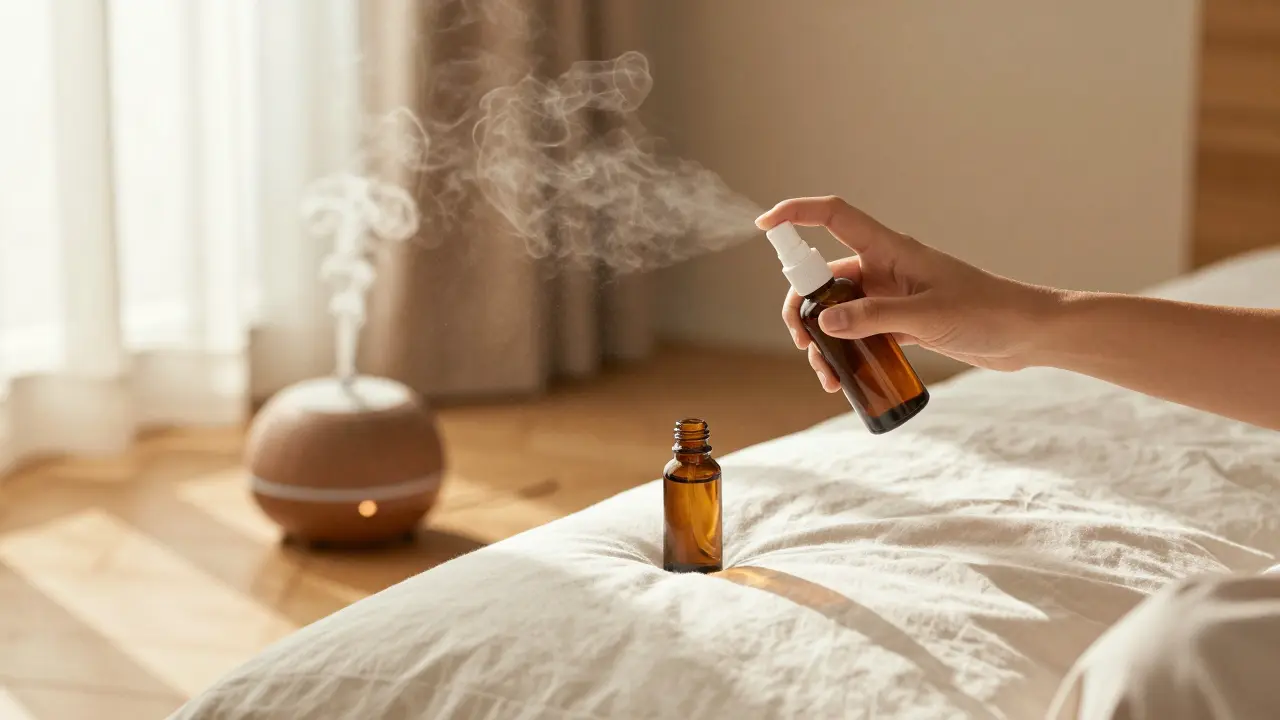
- Morning Reset: Add two drops of bergamot and one drop of peppermint to a spray bottle with water. Spritz your pillowcase and clothes before getting up. It wakes you up gently, without caffeine.
- Commute Calm: Keep a small rollerball of lavender and frankincense in your bag. Roll it on your temples when traffic gets frustrating.
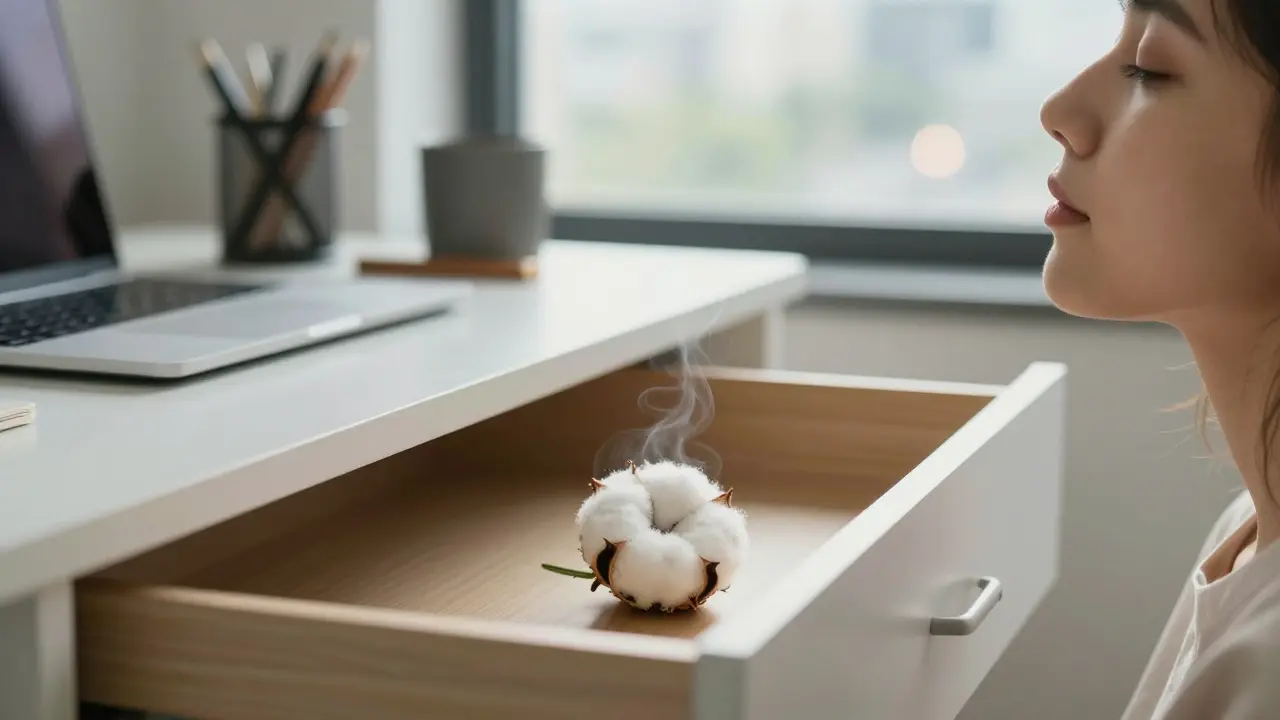
- Work Focus: Place a cotton ball with two drops of rosemary oil inside your desk drawer. Inhale deeply when you hit a mental wall.
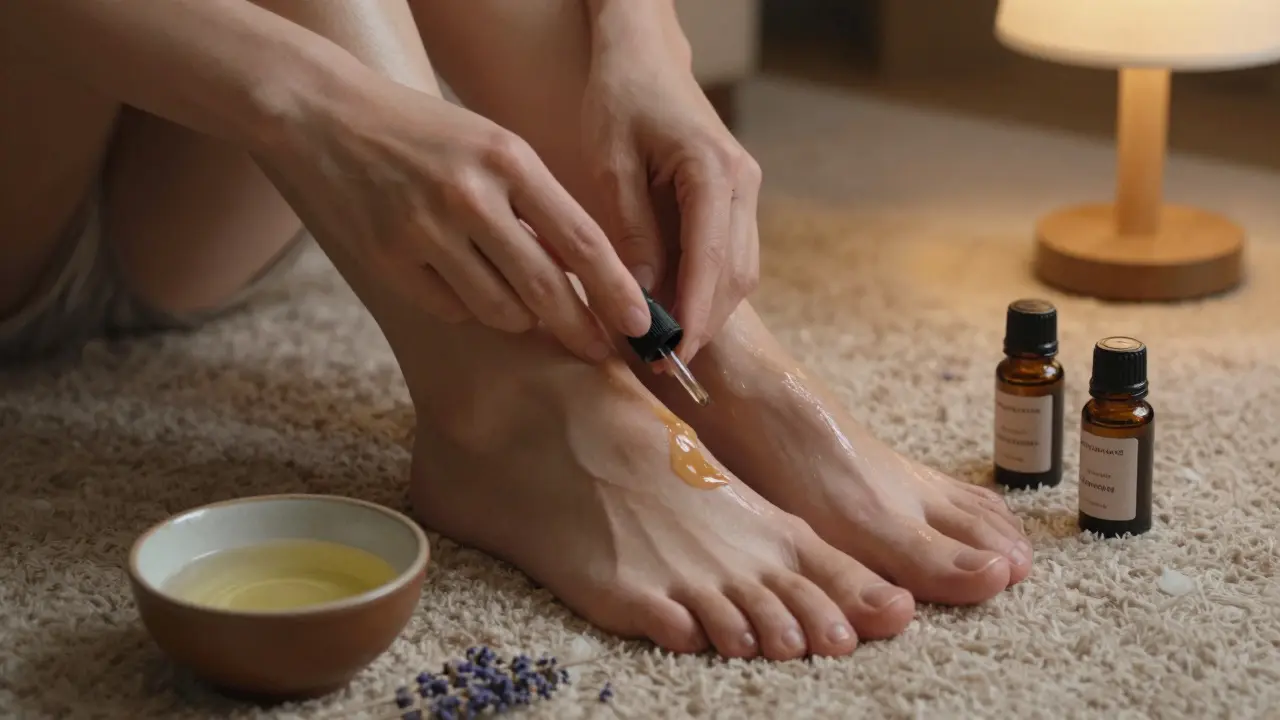
- Evening Wind-Down: Mix three drops of lavender and two drops of cedarwood into a tablespoon of coconut oil. Massage into your feet before bed. Your nervous system will thank you.
- Stress Spike Rescue: When anxiety hits, cup your hands over your nose, breathe in deeply for four seconds, hold for four, exhale for six. Repeat three times with a drop of chamomile on your palm.
What Not to Do
Aromatherapy is safe-but only if you use it right. Here are common mistakes:
- Putting undiluted oils on skin: Oils like cinnamon, oregano, and even peppermint can burn. Always dilute with a carrier oil (jojoba, almond, or coconut) at a 2% ratio-that’s 12 drops per ounce.
- Using oils around pets: Cats and birds are extremely sensitive to essential oils. Avoid diffusing around them entirely. Dogs are more tolerant, but still avoid tea tree, eucalyptus, and citrus oils near them.
- Expecting miracles: Aromatherapy won’t cure depression or chronic pain. It’s a support tool, not a replacement for medical care.
- Buying from Amazon or Walmart: Most “essential oils” sold there are diluted or fake. Stick to reputable brands like Plant Therapy, Aura Cacia, or Eden’s Garden.
Why This Works Better Than You Think
People think aromatherapy is fluffy. But look at how hospitals use it. In Sydney’s Royal Prince Alfred Hospital, nurses use lavender oil in post-op recovery rooms to reduce anxiety without sedatives. In Japan, forest bathing (shinrin-yoku) is a prescribed therapy-and it’s all about scent. Trees release phytoncides, natural oils that lower stress hormones. Aromatherapy is just bringing that same effect indoors.
It’s not about escaping reality. It’s about tuning into your body’s natural rhythms. Your senses are always communicating with your nervous system. Aromatherapy helps you speak the same language.
Getting Started Without Overwhelm
You don’t need ten bottles. Start with one: lavender. Buy a 10ml bottle from a trusted brand. Use it in a diffuser for an hour each evening. Notice how you feel after three days. Then add one more-maybe bergamot for mornings. That’s it.
Keep a small journal. Write down what you used, when, and how you felt afterward. After a week, you’ll start seeing patterns. Maybe peppermint helps your afternoon slump. Maybe patchouli calms your pre-meeting jitters. You’ll learn what your body responds to-and that’s the real power of aromatherapy.
When to Skip It
Aromatherapy isn’t for everyone. Avoid it if you:
- Are pregnant in the first trimester (some oils can stimulate contractions)
- Have asthma or severe allergies (diffusing can trigger reactions)
- Are using chemotherapy or immunosuppressants (some oils interact with medications)
- Have sensitive skin or eczema (patch test first)
If you’re unsure, talk to a certified aromatherapist. In Australia, look for someone registered with the International Federation of Aromatherapists.
Scents are quiet healers. They don’t shout. They don’t require a prescription. They just wait-until you’re ready to breathe them in.
Can I use essential oils directly on my skin?
Only if they’re diluted. Never apply undiluted essential oils to your skin. Mix them with a carrier oil like jojoba, almond, or coconut at a 2% concentration-that’s about 12 drops per ounce of carrier oil. Some oils, like peppermint or cinnamon, are especially strong and can cause burns or irritation if used neat.
Which essential oils are best for sleep?
Lavender is the most researched and widely effective. Studies show it slows heart rate and lowers blood pressure, helping you fall asleep faster. Cedarwood, chamomile, and vetiver also support deep rest. Try diffusing a blend of three drops lavender and two drops cedarwood in your bedroom 30 minutes before bed.
Do essential oils expire?
Yes. Most essential oils last 1-3 years, depending on the type. Citrus oils like lemon and bergamot degrade faster-about 1 year. Oils like patchouli, sandalwood, and frankincense can last up to 5 years. Store them in dark glass bottles, away from heat and sunlight. If the smell changes or feels thin, it’s past its prime.
Can aromatherapy help with anxiety?
Yes, and there’s solid evidence. A 2020 study in the Journal of Clinical Psychology found that inhaling lavender and bergamot reduced anxiety symptoms in participants by 40% over four weeks. It doesn’t replace therapy or medication, but it’s a powerful tool to calm the nervous system in the moment-especially when combined with deep breathing.
Is diffusing essential oils safe for kids?
Use caution. For children under 6, avoid diffusing strong oils like eucalyptus, peppermint, or tea tree. Stick to gentle options like lavender or chamomile, and use only one or two drops in a large room diffuser for short periods (no more than 30 minutes). Always supervise and ensure good ventilation.