How to Incorporate Acu-Yoga into Your Daily Routine

Imagine starting your day not by checking your phone, but by gently pressing a spot between your thumb and index finger while taking a slow breath. That’s acu-yoga - a simple, powerful blend of yoga poses and acupressure points designed to unlock your body’s natural energy flow. It doesn’t require special equipment, a studio, or even 30 minutes. Just five to ten minutes a day can shift how you feel - less tense, more grounded, more awake.
What Exactly Is Acu-Yoga?
Acu-yoga isn’t a new fad. It’s a practical fusion of two ancient systems: traditional Chinese medicine’s acupressure points and Hatha yoga’s mindful movement. While acupuncture uses needles to stimulate energy channels (meridians), acu-yoga uses your own fingers, palms, or even a yoga block to apply gentle pressure to those same points - while holding poses that stretch the connected pathways.
Think of it this way: when you’re stressed, your liver meridian tightens. That’s why you get shoulder tension or headaches. A simple seated twist combined with pressing the Liver 3 point (between the big toe and second toe) can release that built-up pressure. No needles. No cost. Just your body and your breath.
Studies from the Journal of Alternative and Complementary Medicine in 2023 showed that participants who practiced acu-yoga for just 10 minutes daily over eight weeks reported 40% less morning stiffness and 35% improved sleep quality. It’s not magic - it’s physiology.
Why It Works: The Science Behind the Pressure
Your body has over 360 acupressure points, but you only need five to start seeing results. These points sit along meridians - invisible energy highways that connect organs, muscles, and emotions. When you press them during a stretch, you’re sending a signal: “Relax. You’re safe.”
Pressing the Pericardium 6 point (three finger-widths above your inner wrist) activates the vagus nerve, which slows your heart rate and lowers cortisol. That’s why acu-yoga works for anxiety, nausea, and even mild insomnia. It’s not just stretching - it’s nervous system reset.
And unlike regular yoga, where you might hold a pose for the shape, acu-yoga asks you to hold it for the sensation. You’re not trying to touch your toes. You’re trying to feel the release in your lower back as you press the Bladder 60 point behind your ankle.
Five Daily Acu-Yoga Moves (Start Here)
You don’t need a routine. Just pick one or two moves each day. Here are the most effective ones, timed for morning, midday, and evening.
- Morning: Grounding with Toe Press
Stand barefoot. Roll your foot slowly over a tennis ball for 30 seconds. Then press the big toe’s inner edge - the Spleen 1 point - with your thumb for 30 seconds while breathing deep. This wakes up digestion and stabilizes energy. Do this before coffee. - Midday: Wrist Relief for Screen Fatigue
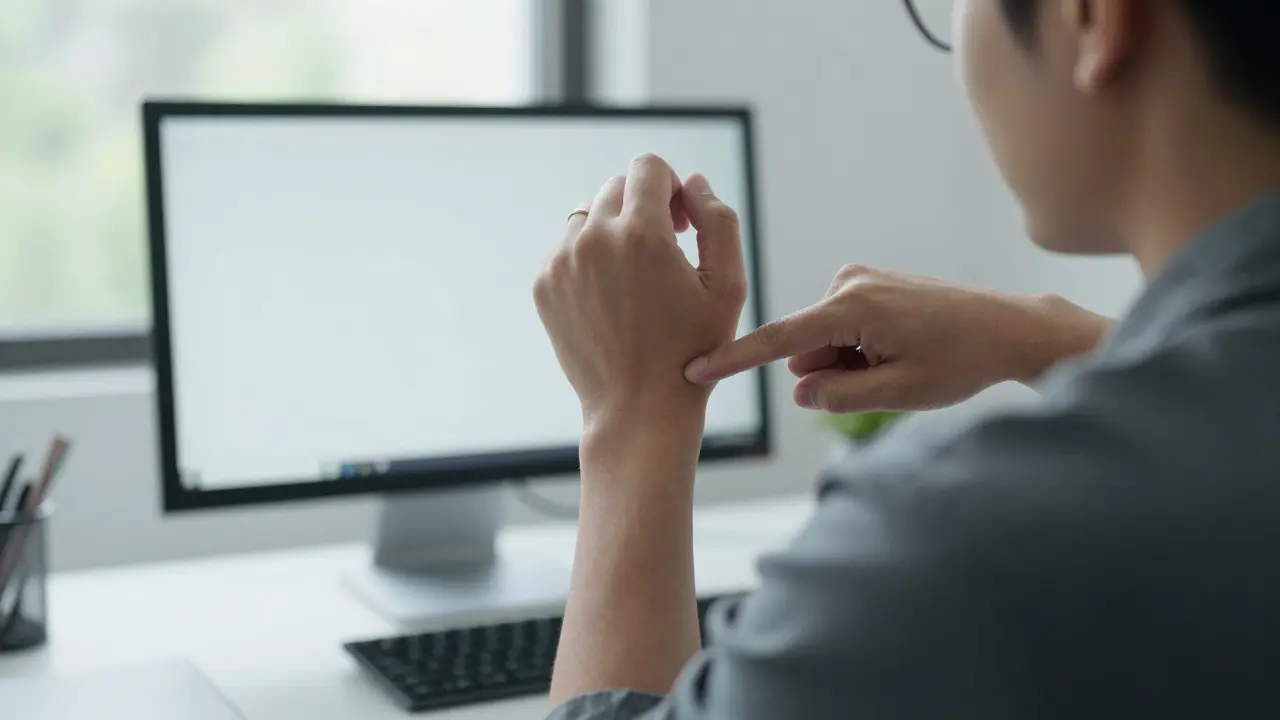
Sit at your desk. Bend your elbow to 90 degrees. Use your opposite thumb to press Pericardium 6 on your inner wrist. Hold for one minute while breathing slowly. This reduces eye strain, headaches, and mental fog from staring at screens. - Evening: Hip Opener for Deep Sleep
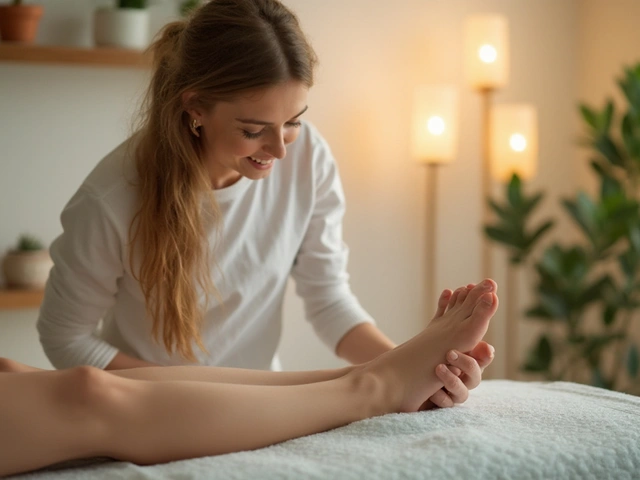
On your back, bend one knee into your chest. Use your fingers to press the Liver 3 point on the top of the opposite foot. Hold for 45 seconds. Repeat on the other side. This releases stored stress and signals your brain it’s time to shut down. - Anytime: Shoulder Release
Reach one arm across your chest. Use your other hand to press the Gallbladder 21 point - the fleshy mound at the top of your shoulder. Hold for 30 seconds. You’ll feel a wave of warmth. That’s your body letting go. - Before Bed: Hand Clasp Calm
Interlace your fingers. Turn palms up. Gently press the center of your palms - the Pericardium 8 point - for one full minute. Breathe into your belly. This calms the nervous system faster than counting sheep.
How to Build a Consistent Habit
Habit stacking works best here. Attach acu-yoga to something you already do.
- Do the wrist press while waiting for your coffee to brew.
- Press your feet while brushing your teeth.
- Stretch and press your shoulders during your commute - even if you’re stuck in traffic.
Set a phone reminder labeled “Press. Breathe. Reset.” Not “Do yoga.” Because that’s not what you’re doing. You’re not trying to be flexible. You’re trying to feel better.
Track your progress for two weeks. Notice: Do you fall asleep faster? Do you stop clenching your jaw? Do you feel less reactive when someone cuts you off in line? Those are your real results.
What to Avoid
Acu-yoga is gentle, but it’s not for everyone in every state.
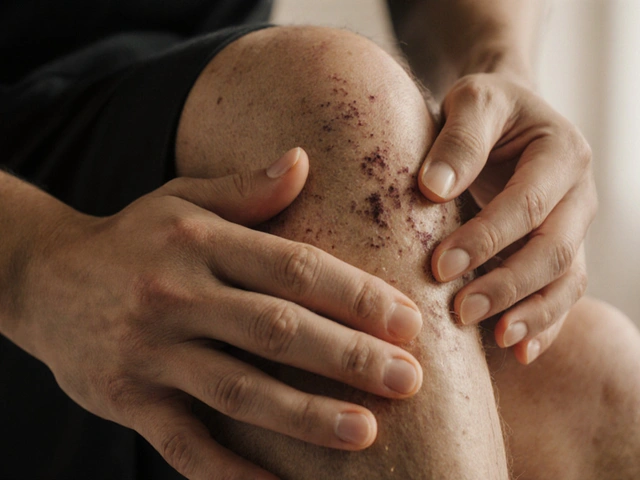
- Don’t press points if you have open wounds, infections, or recent injuries in that area.
- Don’t press hard. You want a 4/10 pressure - enough to feel a dull ache, not sharp pain.
- Don’t try to do all five moves at once. One or two is enough. Consistency beats intensity.
- Don’t use acu-yoga to replace medical care. If you have chronic pain, anxiety, or insomnia, see a professional. Acu-yoga is a tool, not a cure.

When You’ll Start Feeling the Difference
Most people feel a shift within three days. A lighter head. Less tension in the neck. A deeper breath. That’s your nervous system recalibrating.
By day seven, you’ll notice fewer mood swings. Your sleep might deepen. You might catch yourself smiling more.
By day 14, you’ll realize you’ve stopped reaching for your phone the second you wake up. You’re not trying to escape your body anymore. You’re starting to listen to it.
What Comes Next
Once you’re comfortable with these five moves, explore adding a few more points. The Kidney 1 point (center of the foot) is great for fatigue. The Large Intestine 4 point (between thumb and index finger) helps with congestion and emotional blockages.
You can also pair acu-yoga with breathwork: inhale for four counts, hold for two, exhale for six. That’s the rhythm that unlocks the deepest release.
Some people start journaling after their session. One sentence: “What did my body need today?” You’ll be surprised what answers come up.
Can I do acu-yoga if I’m not flexible?
Absolutely. Flexibility has nothing to do with it. Acu-yoga is about pressure and breath, not how deep you can stretch. You can do all the moves seated, lying down, or even standing in line at the grocery store. The goal is to activate points, not perform poses.
Do I need special tools for acu-yoga?
No. Your fingers, a tennis ball, or even a pencil eraser work fine. Some people use acu-yoga balls or acupressure mats, but those are optional. The most powerful tool you have is your own attention.
How is acu-yoga different from regular yoga?
Regular yoga focuses on movement, alignment, and strength. Acu-yoga focuses on energy flow and nervous system regulation. You hold poses longer and add targeted pressure to specific points. It’s less about the shape and more about the internal sensation.
Can acu-yoga help with anxiety?
Yes. Pressing Pericardium 6 and doing the hand clasp calm activate the parasympathetic nervous system, which shuts down the fight-or-flight response. Many people report feeling less reactive and more centered after just a few days.
Is acu-yoga safe during pregnancy?
Most acu-yoga moves are safe, but avoid pressing Large Intestine 4 and Spleen 6 during pregnancy, as they can stimulate contractions. Stick to wrist, foot, and hand points. Always check with your provider if you’re unsure.
How long should I hold each point?
Hold each point for 30 to 60 seconds, or until you feel a release - warmth, tingling, or a sigh. You don’t need to time it perfectly. Just breathe and stay with the sensation.
Final Thought: It’s Not About Doing More
You don’t need to add another thing to your to-do list. Acu-yoga isn’t about discipline. It’s about returning - to your breath, to your body, to the quiet space between thoughts. Five minutes a day isn’t a commitment. It’s a gift you give yourself. And over time, that gift becomes the foundation of how you move through the world: calmer, clearer, and more present.