Acupressure: A Simple, Non-Invasive Way to Relieve Pain and Stress
Acupressure Point Finder
Recommended Points
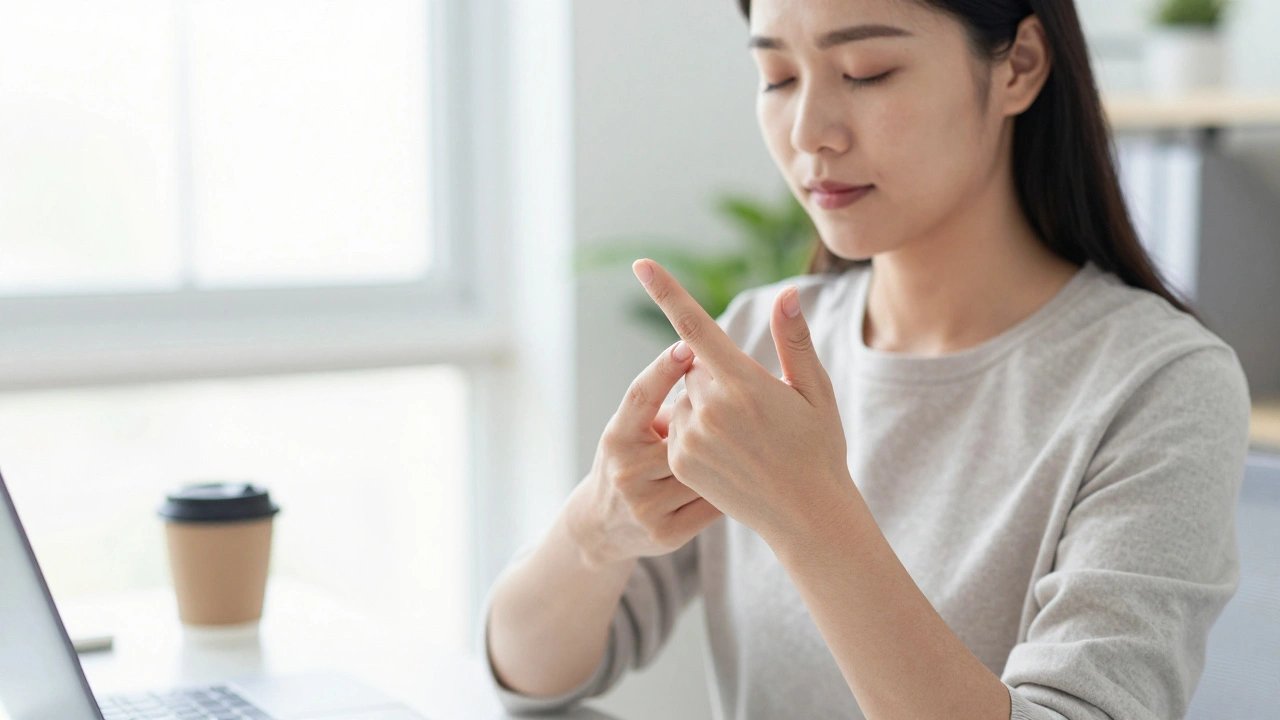
How to use: Press firmly with your thumb for 30-60 seconds. Breathe slowly. Repeat 2-3 times.
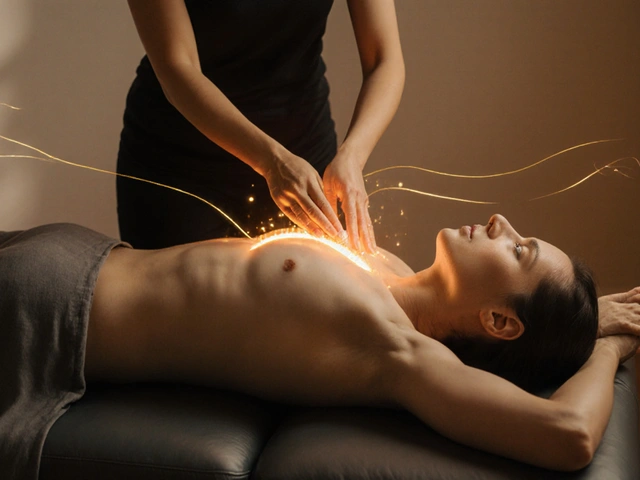
When you’re stuck in pain or overwhelmed by stress, you don’t always need needles, pills, or surgery to feel better. Acupressure has been helping people do exactly that for over 5,000 years - and you don’t need a clinic or a degree to try it. This ancient technique uses your own fingers to apply pressure to specific spots on your body, triggering natural healing responses. It’s not magic. It’s biology.
How Acupressure Works
Acupressure comes from traditional Chinese medicine, where energy - called qi (pronounced "chee") - flows through pathways in the body known as meridians. When this energy gets blocked, you feel pain, tension, or illness. Pressing certain points along these meridians helps unblock the flow. Modern science doesn’t talk about qi, but it does confirm that pressing these spots activates nerves, releases endorphins, and reduces muscle tension.
Studies from the National Institutes of Health show acupressure can significantly reduce chronic lower back pain, nausea from chemotherapy, and menstrual cramps. One 2023 review of 17 clinical trials found that acupressure was as effective as over-the-counter painkillers for tension headaches - without the stomach upset or drowsiness.
Key Pressure Points You Can Use Today
You don’t need to memorize all 361 acupressure points. Just a handful will cover most daily issues. Here are the five most useful ones:
- LI4 (Hegu) - Between your thumb and index finger, on the fleshy mound. Press firmly for 30 seconds to ease headaches, toothaches, or sinus pressure.
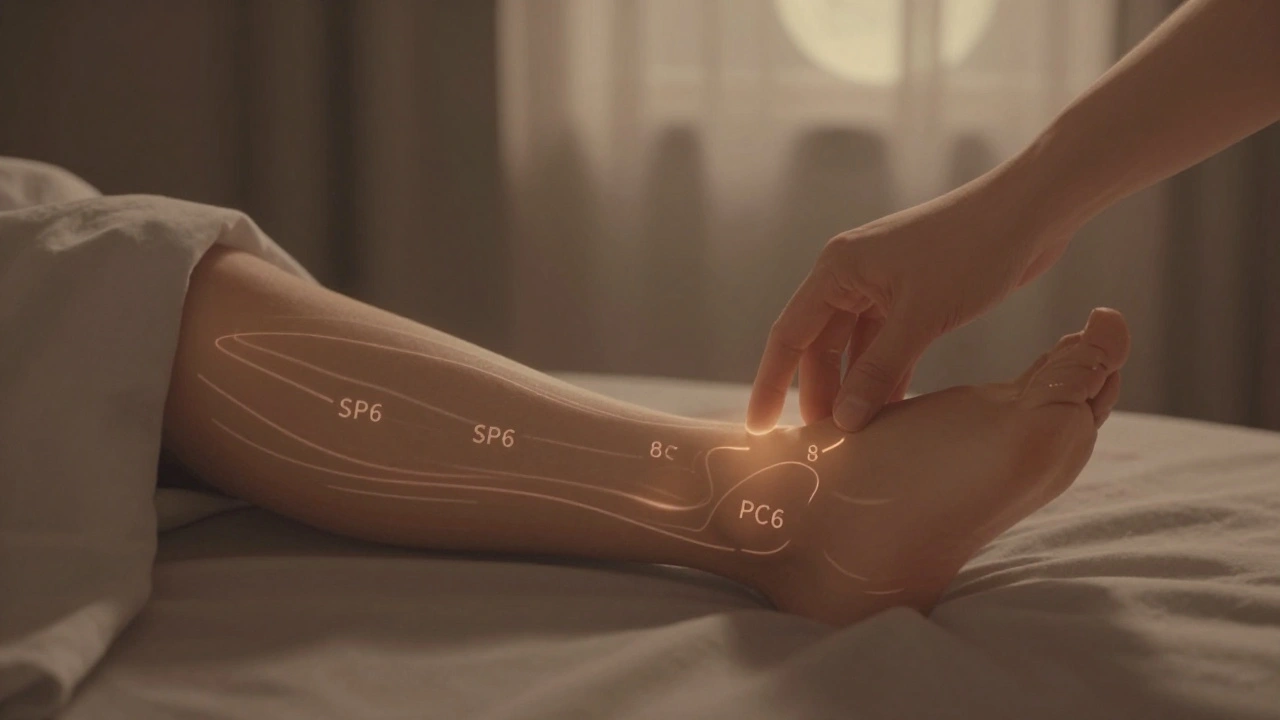
- PC6 (Neiguan) - Three finger-widths below your wrist crease, between the two tendons. Great for nausea, motion sickness, or anxiety.
- LV3 (Taichong) - On the top of your foot, in the dip between your big toe and second toe. Helps with stress, anger, and menstrual pain.
- GB20 (Fengchi) - At the base of your skull, in the hollows where your neck meets your head. Relieves neck stiffness, migraines, and eye strain.
- SP6 (Sanyinjiao) - Four finger-widths above your inner ankle bone. Useful for insomnia, PMS, and digestive issues.
Use your thumb or index finger. Apply steady pressure - not so hard it hurts, but enough that you feel a deep ache. Hold for 30 to 60 seconds. Breathe slowly. Repeat two or three times on each side if needed.
When Acupressure Works Best
Acupressure isn’t a cure-all, but it shines in specific situations:
- Chronic tension - If your shoulders are always tight, or your jaw aches from clenching, daily acupressure on LI4 and GB20 can make a noticeable difference.
- Morning nausea - Pregnant women, people on chemo, or even those with severe motion sickness find PC6 helps more than ginger or pills.
- Stress overload - After a long workday, pressing LV3 and SP6 for five minutes can calm your nervous system faster than scrolling through social media.
- Sleep troubles - A 2022 study in the Journal of Clinical Sleep Medicine showed participants who used acupressure on SP6 and HT7 (on the wrist) fell asleep 20 minutes faster on average.
It’s not a replacement for medical care if you have a serious condition. But for everyday discomforts, it’s a free, safe tool you can use anytime - in your car, at your desk, or before bed.
What Doesn’t Work
Some people expect acupressure to fix everything overnight. That’s not how it works. You won’t magically heal a herniated disc or reverse diabetes with finger pressure. It’s a supportive therapy, not a miracle.
Also, avoid pressing points if you have:
- Open wounds, burns, or infections in the area
- Blood clotting disorders or are on blood thinners
- Pregnancy (some points like SP6 and LI4 can stimulate contractions - talk to your provider first)
- Severe osteoporosis or recent fractures
If you feel sharp pain, dizziness, or numbness while pressing, stop. You’re pressing too hard or hitting the wrong spot. Gentle pressure is key.
How to Make It Part of Your Routine
Start small. Pick one point that matches your biggest issue - say, LI4 for headaches - and use it once a day for a week. Track how you feel. Do you sleep better? Is your neck less stiff? You might be surprised.
Many people combine acupressure with deep breathing. Inhale through your nose for four counts, hold for four, exhale through your mouth for six. Do this while pressing. It doubles the calming effect.
Try it before your morning coffee, during your lunch break, or right after brushing your teeth at night. Five minutes a day is enough to build a habit. No equipment needed. No apps required. Just your fingers and a few quiet moments.

Acupressure vs. Acupuncture
People often confuse the two. Acupuncture uses thin needles inserted into the skin. Acupressure uses finger pressure. Both target the same points. But acupressure is safer for home use, cheaper, and doesn’t require training.
Acupuncture may work faster for deep pain or chronic conditions because needles stimulate points more intensely. But for daily stress, tension, or mild discomfort, acupressure is just as effective - and you can do it anytime.
Many massage therapists and physiotherapists now offer acupressure as part of their sessions. If you want guidance, ask for it. But you don’t need to pay for it to get results.
Real-Life Results
One woman in Adelaide, 58, started using acupressure after years of migraines and insomnia. She pressed PC6 and SP6 every night before bed. Within three weeks, her headaches dropped from five times a week to once. She stopped taking sleep aids. "I didn’t believe it would work," she said. "But my body started listening."
A truck driver in Melbourne used LI4 and GB20 during long hauls. His neck pain, which used to make him miss work, improved so much he now teaches his coworkers how to do it.
These aren’t outliers. They’re everyday people using an ancient tool in modern life - no prescriptions, no clinics, just a few minutes and their own hands.
Can acupressure really relieve pain without medication?
Yes. Multiple clinical studies show acupressure reduces pain from headaches, backaches, menstrual cramps, and nausea. It works by triggering your body’s natural painkillers - endorphins - and relaxing tense muscles. It’s not as strong as opioids, but for mild to moderate pain, it’s often enough - and without side effects.
How long does it take to feel results from acupressure?
Some people feel relief within 30 seconds - especially for nausea or tension headaches. For chronic issues like insomnia or back pain, it usually takes 3 to 7 days of consistent use. The key is repetition. Think of it like stretching: one session helps, but daily practice changes things.
Is acupressure safe during pregnancy?
Most acupressure points are safe, but a few - like LI4 and SP6 - can stimulate contractions. Avoid them unless you’re in labor or under professional guidance. For morning sickness, PC6 is safe and effective. Always check with your midwife or doctor if you’re unsure.
Can I use acupressure with other treatments?
Absolutely. Many people use it alongside physical therapy, meditation, or even prescription meds. It’s a complementary tool. Just don’t use it to replace medical advice for serious conditions like heart disease, cancer, or infections. It supports healing - it doesn’t override it.
Do I need special tools or apps for acupressure?
No. Your fingers are all you need. Some people use acupressure mats or balls for back points, but they’re optional. Apps can help you find points, but they’re not necessary. Just learn the five key spots, practice daily, and your body will start to respond.
Next Steps: Try It Yourself
Right now, find your LI4 point - between your thumb and index finger. Press it with your other hand. Breathe. Hold for 30 seconds. Notice how your shoulders feel. That’s it. You’ve already started.
Acupressure isn’t about mastering a complex system. It’s about reconnecting with your body’s own ability to heal. You don’t need permission. You don’t need a license. Just curiosity and a little patience.